Kansas State University

search

Powercat Financial

Protecting Yourself from Identity Theft: Tips and Recovery Steps

Identity theft is a growing concern in today’s digital age. It’s a crime where someone wrongfully obtains and uses another person’s personal data for fraud or deception, typically for economic gain. The consequences can be severe, ranging from financial loss to damaged credit scores and even legal troubles. Understanding the different types of identity theft and the common tactics thieves use is crucial for protecting yourself. By staying informed and vigilant, you can take proactive steps to safeguard your personal information and minimize the risk of becoming a victim.

Understanding Identity Theft

Identity theft can take various forms, including:

  • Financial Identity Theft: Using someone’s financial information to make unauthorized transactions.
  • Social Security Identity Theft: Stealing someone’s Social Security number to commit fraud.
  • Medical Identity Theft: Using someone’s medical information for fraudulent purposes.
  • Synthetic Identity Theft: Combining real and fake information to create a new identity.
  • Tax Identity Theft: Filing fraudulent tax returns using someone else’s information.
  • Criminal Identity Theft: Using someone else’s identity to commit crimes.

Common Tactics Used to Steal Your Identity

Identity thieves use various methods to obtain your personal information, such as:

  • Phishing: Fraudulent emails or websites that trick you into providing personal information.
  • ATM/Debit Card Skimmers: Devices that capture card information at ATMs or payment terminals.
  • Public Wi-Fi: Unsecured networks that can be exploited to steal data.
  • Dumpster Diving: Searching through trash for personal information.
  • Stolen Wallet/Purse: Physical theft of items containing personal information.
  • Fraudulent AI-Generated Phone Calls: Using AI to mimic voices and trick people into revealing information.

Warning Signs of Identity Theft

Be vigilant for signs that your identity may have been stolen, such as:

  • Denial of Loans: Being denied credit or loans unexpectedly.
  • Debt Calls: Receiving calls about debts for accounts you didn’t open.
  • Unexpected Bills: Getting bills for items you did not purchase.
  • Unrecognized Credit Cards: Information for credit cards you didn’t open.
  • Inaccurate Account Balances: Account balances that don’t look accurate.

Action Plan in Case of Identity Theft

If you suspect identity theft, take immediate action:

  • Freeze All Cards: Prevent further unauthorized transactions.
  • Report the Theft: Use resources like ReportFraud.ftc.gov or IdentityTheft.gov.
  • Dispute Errors: Contact your card companies to dispute fraudulent charges.
  • Freeze Your Credit: Reach out to credit bureaus like Experian, Equifax, and TransUnion.
  • Chargeback Rights: Understand your rights to reverse fraudulent charges.
  • Future Vigilance: Stay aware and monitor your accounts regularly.

Preventing Identity Theft in the Future

To protect yourself from identity theft, consider these preventive measures:

  • Pull Your Credit Score: Regularly check your credit report for any discrepancies.
  • Free Credit Monitoring: Use services that offer free credit monitoring.
  • Confidentiality: Keep passwords and PINs confidential.
  • Monitor Statements: Regularly review your insurance and financial statements.

Identity theft can have severe consequences, but with the right knowledge and proactive measures, you can protect yourself and recover effectively if it happens. Stay informed, vigilant, and take advantage of the resources available to safeguard your personal information. If you have further questions, schedule an appointment with a peer counselor at Powercat Financial.


KB Hennes

Graduate Assistant

Powercat Financial

www.k-state.edu/powercatfinancial
Understanding Interest Rates: How Loans, Savings, and Credit Cards Work Differently

Interest rates are at the core of nearly every financial decision. Decisions about loans, savings, and credit cards all have a component of interest rates. Understanding how interest rates work for these financial decisions is crucial. In this post, we will discuss what interest rates are and how they work for loans, savings, and credit cards.

What are Interest Rates?

Interest rates are the cost of borrowing money or the return on the money that you are saving. If you are a borrower, the interest rate is the price that you are paying someone to use their money. If you are saving, it is the amount that the financial institution is paying you for depositing money into an account at which they are the custodian.

1. Interest Rates and Loans
When you take out a loan, such as a student loan, mortgage, or car loan, you pull out the loan amount, the principal, and agree to pay that amount back, plus interest, over time. There are two main types of interest rates used for loans:

  • Fixed Interest Rates: This type of interest rate stays the same throughout the time period of the loan. This type of interest rate provides some security as you know how much you will be paying in interest month to month.
  • Variable Interest Rates: This type of interest rate can change over time. These are measured by the margin specified by the loan issuer, which is typically a benchmark available to the public. This could possibly lead to lower rates if the benchmark decreases but could also mean higher payments if it increases.

How it works: The amount of interest that you pay is based on the principal amount of the loan, the interest rate, and the repayment period of the loan. The longer it takes for you to repay the loan, the more you will end up paying in interest.

Example: If you borrow $10,000 for a student loan at a fixed rate of 6% for 10 years, you will pay 6% on the balance of the loan until it is paid off. Over time, you will end up paying more than the principal balance of the loan.

2. Interest Rates and Savings
When you save money in a savings account or other interest-bearing accounts, the bank will pay you interest for letting them use your money. The interest that you make in these accounts is compounded most of the time, meaning that you will earn interest on your interest.

  • Annual Percentage Yield (APY): When looking at bank accounts, you may hear this term. This is the rate that shows you the total amount of earned interest in a year that accounts for compound interest, whereas the interest rate is the percentage of interest earned during a specific time period.

How It Works: Interest on a savings account can be calculated daily, monthly, or yearly. The higher the interest rate of your account, the more it will grow over time. Most of the time, the interest rate for savings accounts is lower than loans. But you can still benefit from the interest that is compounding if you keep your money in the bank for a long period of time.

Example: If you deposit $10,000 into a savings account with an interest rate of 1%, assuming that the interest is compounded yearly, you will earn $100 in interest after one year.

3. Interest Rates and Credit Cards
Credit cards provide a very convenient way to make purchases. However, credit cards have very high interest rates that can really hurt if you carry a month-to-month balance. The interest for credit cards is charged on the unpaid balance, which can grow very quickly.

  • Annual Percentage Rate (APR): This is the interest rate that is charged on your credit card balance. Credit card APRs depend on your credit score and the credit card issuer and can be anywhere from 15% to over 30%.

How It Works: Credit cards charge interest on the balance that is not paid off by the due date. This means that if you can only make the minimum payment, you will still accrue interest on the remaining balance. This is why it is very important to pay off your credit card balance in full every month, as this could lead to a cycle of debt.

Example: If you owe $100 on your credit card with a 20% APR and only make the minimum payment for the month that you owe that $100, for every month that you do not pay off that amount, you will be accruing interest that can build up very quickly.

Key Differences in How Interest Works

  • Loan interest: For loans, you pay interest to borrow money over a period of time. The interest rate on that loan can be fixed or variable.
  • Savings interest: For savings, you earn interest on the money that you deposit into an account. Your goal should be leaving money in this account as long as possible to take advantage of compound interest.
  • Credit card interest: For credit cards, you pay interest on the amounts you borrow from issuers that you carry over from month to month. The interest rates on credit cards are generally higher than others.

How to Manage Interest Rates

  • Pay off credit cards in full to avoid high interest charges.
  • When getting a loan, shop around to look for the best rates.
  • Choose a savings account with a high interest rate to maximize earnings.
  • If interest rates drop, consider refinancing your loans to lower payments.

Conclusion: The Importance of Understanding Interest Rates
As mentioned earlier, interest rates are the backbone of nearly every financial decision and are important to understand so that you can make smart financial decisions. Whether you are borrowing money, saving, or using a credit card, you must be aware of how interest rates impact your finances. By doing this, you can avoid unnecessary debt and maximize savings.


Nathan Haney

Peer Counselor II

Powercat Financial

www.k-state.edu/powercatfinancial

Understanding Employee Benefits: What to Look for When Job Hunting

When searching for a job, it’s easy to get caught up in the salary amount and forget about employee benefits. The prevalence of benefits in job offers has increased over time and now makes up around 30% of your overall compensation package. While there are many different examples of employee benefits, today, we will discuss a few common examples and some things to keep in mind:

Monetary Benefits
Monetary benefits provide the employee with direct financial compensation. These items will have a direct impact on an employee’s take-home pay. Examples include:

  • Salary or Hourly Wage
    A salary is a fixed amount that employees earn annually regardless of the number of hours worked. Salaried workers are typically paid biweekly or monthly and receive the same amount each paycheck. An hourly wage means that employees are paid per hour worked and are eligible to receive overtime pay for working more than 40 hours a week. It is important to note that overtime hours are not always guaranteed and usually depend on the needs of the company.
  • Signing Bonus
    A one-time payment offered to incentivize new hires to join the company.
  • Yearly Increases/Bonuses
    Annual raises and bonuses are awarded once a year to recognize performance, long-term loyalty to the company, and cost of living adjustments. Yearly increases are typically seen every year you are with the company, whereas bonuses are not guaranteed and typically based on your performance during that year.
  • Profit Sharing
    A company shares a portion of its profits with its employees. Financial compensation is based upon the performance of the company. This approach motivates employees to work harder since their earnings are directly tied to the company’s success.
  • Stock Options
    Stock options give an employee the right to buy company shares at a predetermined price. Employees will benefit as the company’s stock value increases over time.

Near-Monetary Benefits
Near- Monetary benefits are indirect financial perks. While they do not show up as cash on your paycheck, they can help you save money or remove items from your monthly budget. Here are some examples:

  • Health Insurance
    Employers typically offer group health insurance plans that are more affordable than an individual plan. Health insurance helps to cover out-of-pocket medical expenses such as doctors’ visits, hospital stays, procedures, and prescriptions. By paying a monthly premium, employees gain access to a range of healthcare services at a lower cost, often with a portion of the premium covered by the employer.
  •  Retirement Contributions
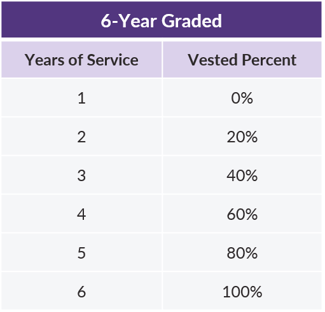
    Many employers offer retirement savings plans such as a 401(k) and match a portion of the employee’s contributions. This is essentially free money helping you to build your retirement savings faster. These contributions are typically deducted from your paycheck. Companies use a vesting schedule to determine when an employee gains full ownership of employer contributions, typically between three to six years. If you leave the company before the end of vesting, you will only be entitled to a portion of the employer’s contributions but will still receive all the contributions you, as the employee, have contributed. Below is an example of a vesting schedule.

  • Paid Time Off
    Paid time off allows employees to take time away from work while still receiving their regular pay. Some companies separate the days into vacation and sick days while others combine them into a single PTO bank. Employers may offer PTO as a set number of days, accrued over time, or unlimited. If your company uses unlimited PTO, I encourage you to ask questions such as the average number of days taken per year and the approval process for time off requests.
  • Tuition Reimbursement
    Employers may offer tuition reimbursement to encourage employees to continue their education. The company will typically cover part of or all the costs for job related courses or degree programs. There may be specific requirements such as maintaining a certain GPA or staying with the company for a set period after completing their education.
    Other examples include complimentary childcare, a company car, travel awards, relocation assistance, training and education, and optical or dental insurance.

Non-Monetary Benefits
Non-monetary benefits are perks that enhance an employee’s well-being, job satisfaction, and work-life balance without directly providing monetary compensation. Some examples include:

  • Flexible Work Arrangements
    Employers may offer flexible work arrangements such as remote work and flexible hours. While these do not cost the company anything, they can help to improve the employees’ stress levels and work-life balance. Some companies have even begun to offer working 4/10s, four days a week with ten hours each day.
  •  Job Title
    A job title that accurately reflects all your responsibilities can be valuable. Having a prestigious title can help build your professional reputation and make it easier to qualify for job opportunities in the future.
  • Home Equipment Usage
    Home equipment usage refers to an employer providing remote workers with essential equipment such as laptops or monitors. If you plan to work hybrid, it can be useful to have a separate laptop in the office and at home to minimize the load you are carrying into work each day.

A competitive salary is an important part of your offer, but a strong benefits package can improve your overall happiness and stability at a job. Before accepting a job offer, take the time to review what’s included and compare it to your priorities and long-term goals. Powercat Financial counselors would be more than happy to review an offer alongside you if you feel overwhelmed. Lastly, don’t forget that many benefits, such as PTO, flexible scheduling, and retirement contributions, have the potential to be negotiable. Advocating for your needs can lead to an offer that truly fits your lifestyle. If you are interested in learning more about this topic, schedule an appointment via Navigate to meet with a Powercat Financial peer counselor.

Avery Williams
Peer Counselor I
Powercat Financial
www.k-state.edu/powercatfinancial

Financial Strategies for Study Abroad Programs


Studying abroad is an exciting opportunity to gain international experience, develop new skills, and explore different cultures. However, the financial aspect of studying abroad can be daunting. Having studied in the Czech Republic, I understand the challenges students face when planning for an overseas experience. But with the right financial strategies, you can make studying abroad more affordable and manageable.

1. Research and Apply for Scholarships
One of the best ways to fund a study abroad experience is through scholarships. Kansas State University and various organizations offer scholarships specifically for students looking to study abroad. Here are some places to start:

    University Programs: Check with your university’s study abroad office for available scholarships. Many schools, like Kansas State University have dedicated funds to help students offset the cost of tuition, housing, and travel.
    Major-Specific Scholarships: If you’re in a specific school or college within K-State, they may have additional scholarships. As a personal example, I found scholarships through the School of Business that helped support my trip.
    Affiliated Programs: If you’re part of an honors society, professional organization, or other academic programs, check if they offer scholarships for international experiences. I was able to secure funding through programs I was involved in.
    National and External Scholarships: Look into well-known scholarships like the Gilman Scholarship, Boren Awards, or the Fund for Education Abroad. These are competitive but can significantly reduce costs.

2. Plan Your Budget Before You Go
Having a clear budget before heading abroad is crucial. Here are some essential budgeting tips:

    Estimate Costs: Break down expenses into categories like tuition, housing, food, transportation, entertainment, and emergency funds.
    Set a Monthly Spending Limit: Research the cost of living in your host country and create a monthly spending plan. Apps like Mint or PocketGuard can help track your expenses.
    Consider Exchange Rates: If your destination uses a different currency, account for exchange rate fluctuations and bank fees when withdrawing money. Many banks have affiliated ATMs abroad, where the fees for withdrawing cash are much lower.

3. Reduce Expenses While Abroad
Even with scholarships, minimizing expenses will help you stay within your budget.

    Use Student Discounts: Many countries offer discounts on transportation, museums, and restaurants for students. Always carry your student ID!
    Cook at Home: Eating out can add up quickly. Shopping at local markets and cooking at home can save money.
    Choose Affordable Housing: Look for university dorms, host families, or shared apartments instead of expensive private rentals.
    Travel Smart: Use budget airlines, trains, or buses for travel. Consider booking in advance or using discount cards for transportation.

4. Prepare for Emergencies
Unexpected costs can arise while abroad. Make sure to:

    Have an Emergency Fund: Set aside extra savings for medical expenses, last-minute travel, or other unexpected costs.
    Get the Right Insurance: Some programs require travel or health insurance. Make sure you’re covered in case of emergencies.

Final Thoughts
Studying abroad is an incredible experience that doesn’t have to break the bank. By seeking out scholarships, budgeting wisely, and being mindful of expenses, you can make your dream of studying abroad a reality. If you’re considering studying abroad, start planning early and take advantage of the financial resources available to you!

Jackson Rohn
Peer Counselor II
Powercat Financial
www.k-state.edu/powercatfinancial

Student Loan Refunds and Future Impacts

Many students have been in the situation where they need to take out student loans during their time in college. Not every student at Kansas State takes out loans, but according to College Factual around 45% of Kansas State students take out loans during their time in college. A topic this group of students could have been exposed to is Student Loan Refunds.

To explain student loan refunds, we need to go inside the mind of a college student. So, picture this your semester is about to get started and you go check your bank app to see if your last paycheck from your summer job has hit your account and you see a $1,000 deposit from Kansas State. You think wow finally they are giving me money for a change instead of me having to pay. With this in mind you treat yourself to a nice dinner of Texas Roadhouse with your roommates to get the semester started.

You may think to yourself what about this story is important, it just seems like a random day as a college student. For background the $1,000 deposit that came from Kansas State in this case was a student loan refund. Student loan refunds are when student’s total loans taken out are more than their tuition bill, KSIS for K-State students. The amount of money coming into student’s bank accounts can differ based upon what financial aid items they have accepted. In this example we will say the student in question had a tuition cost of $6,000 and they accepted student loans for the semester of $7,000. If the student needed that extra $1,000 for monthly expenses, then there are no problems, but many students inadvertently get student loan refunds and that is where the problem lies. In this case students are taking out more loans than they actually need causing problems for their future self financially.

If a college student on average takes out an extra $1,000 in student loans per semester for the usual length of 4 years of study, using unsubsidized loans to as the vehicle for the loans. While in school the extra student loans will accumulate interest which adds to the student loan situation post-graduation. This interest is on top of the extra $8,000 taken out in loans over the time in college. Below we have shown the total interest from the extra loans.

In total the amount of interest that will be added to the student loan balance is around $1,175 over the 8 semesters the student is in college. With the interest and original loans combined the student will have $9,175 in loans added to their balance. Taking this loan balance individually and calculating the monthly payment we are able to see that this student would have a monthly payment of around $104. This payment will take place for 10 years and over those 10 years the student will pay a total of $12,518.

Student Loan Refunds seem like a really small piece of the puzzle when it comes to students’ full student loan situation, but it can be very impactful in the future. If you feel that your student loan situation could be improved come talk with one our Peer Counselors over at Powercat Financial!

Keaton Verdict
Peer Counselor III
Powercat Financial
www.k-state.edu/powercatfinancial

Spring Break: How to Enjoy Your Time Without Breaking the Bank

The spring semester can bring a multitude of different feelings as we enter the second half of the year, especially the spring break that we are all so anxious for. This break may look different for each of us, but I think we can all agree that the biggest goal is to just simply enjoy it. But how do we enjoy it without breaking the bank?

With the excitement of it just around the corner, there can also be concerns or overwhelming aspects that come with the much-needed break. So, I have piled together some tips and tricks on enjoying the break while combating the expenses that come with it.

Travel in Groups
If you’re like me and love to travel, this may be on your list of things to do over the spring break week. However, you may be wondering how much it’ll cost or how you will afford it which are important things to consider. Finding a group to travel with gives you both the experiences with them but also the benefit of being able to split the expenses. A shared hotel room could be halved in price. Or, splitting the price of fuel could greatly reduce the overall price.

Create a Budget and Stick to It
While I love having a plan, sometimes I also enjoy doing spontaneous adventures, but I still want to ensure I don’t go over the budget. With an extensive plan, I can budget how much I need to save up for the trip and how much I will spend each day. Plus, having a plan ensures I will get to do the things I really hoped to do. With this, a little extra cash for souvenirs or spontaneous adventures can be incorporated into my detailed budget, so it’s not entirely strict. We would love to help you create your spring break budget at Powercat Financial. Schedule an appointment using this link!

Choose Cost-Friendly Activities
Traveling may be at the top of my list, but it might not be for you. This doesn’t mean you can’t enjoy your break! There are so many activities that are local, low cost, and even free. Finding adventures that don’t cost a dime can feel rewarding in that you haven’t spent any money. In Manhattan, make it a goal to visit every mural you can find. This activity can be customized in any way whether solo or with friends, and it’s totally free!

More Cash, Less Credit

After creating a budget, I know I have the money available for each activity I have planned. To limit myself from overspending, I use physical cash or a debit card rather than a credit card. Credit cards typically have higher available amounts that can be spent at once, so it’s easy to swipe my card and move on without hardly thinking twice. With cash or a debit card, I know exactly how much I have and whether my budget can handle it. This strategy has been really beneficial for me in managing my finances effectively.

These can also be used in our daily lives, too. Creating a budget for ourselves and sticking to it can help ensure we are covered for upcoming expenses, plus it can reduce money-related stress! Traveling in groups can not only help limit our costs but can be safer too! While having these tips and tricks in mind, I wish you the most relaxed spring break yet, whether you spend it on a beach with friends or family or around Manhattan, KS. Both of which we can plan for and bring ourselves joy!

Alivia Kaiser
Peer Counselor I
Powercat Financial
www.k-state.edu/powercatfinancial