Kansas State University has selected the second cohort of Robert E. Campbell Scholars. This group of high-achieving and academically talented students in the University Honors Program will receive renewable scholarships.
Scholars receive $6,000 per year, renewable for up to four years, with the Campbell scholarship, which is the first four-year scholarship ever offered by the honors program. It was made possible by Robert “Bob” E. Campbell, a first-generation student who graduated from K-State with a degree in business administration in 1950 and went on to launch his own company, Robert E. Campbell Oil and Gas Operations.
To strengthen the Campbell Scholars community, first-year scholars will live together in honors housing in the Boyd and Van Zile residence halls and attend events throughout the academic year.
The Leadership Communication doctoral program at Kansas State University celebrated the fall 2025 graduates in December. Dominic Barnes, Ph.D., David Barnhart, Ph.D., Emmanuel Jeje, Ph.D., and Michaela Saunders, Ph.D., have completed their doctorates in Leadership Communication, an interdisciplinary program between the Department of Communications and Agricultural Education, the Staley School of Leadership, and the A.Q. Miller School of Media and Communication.
Graduates’ dissertation topics and research areas demonstrate the breadth and depth of learning and the possibilities within the Leadership Communication doctoral program for students whose desire to make a positive impact in our communities is evident in their summaries: Continue reading “Leadership Communication celebrates fall 2025 doctoral graduates “→
Graduate school can be a time of discovery, challenge, and growth. Between research deadlines, coursework, and balancing life beyond the classroom, it’s easy to focus on technical expertise and forget that leadership (how we communicate, collaborate, create impact and more) is just as vital to success.
That’s why the Graduate School and the Staley School of Leadership are partnering once again to offer the Grad Edge: Leadership Development Program this spring. This semester-long experience is designed to help graduate students strengthen their leadership mindset, build professional confidence, and apply what they learn to real challenges in their research, work, and communities. Applications are open now and due Dec. 5, on the Grad Edge website.
“Giving graduate students the opportunity to work alongside peers from many different fields creates a unique learning environment, where they can focus on their leadership development while building their community on campus,” said Mac Benavides, Ph.D., assistant professor at the Staley School of Leadership. “Our cohorts become close, and that really deepens their learning when they are working on skills like collaboration, mobilizing others, and thinking in innovative ways.” Continue reading “Finding your edge in graduate school: Leadership development this coming spring”→
The Leadership Communication doctoral program at Kansas State University celebrated the spring 2025 graduates in May. Xatyiswa Maqashalala, Ph.D., Tamas Kowalik, Ph.D., and Andrew Smith, Ph.D., have completed their doctorates in Leadership Communication, an interdisciplinary program between the Department of Communications and Agricultural Education, the Staley School of Leadership, and the A.Q. Miller School of Media and Communication.
From left: Andrew Wefald, Ph.D., Andrew Smith, Ph.D., Xatyiswa Maqashalala, Ph.D., Tamas Kowalik, Ph.D., Tim Steffensmeier, Ph.D.
Xatyiswa Maqashalala, Ph.D., has a Bachelor’s of Science degree in agriculture, crops and horticulture from the University of Fort Hare (South Africa), a master’s in sustainable agriculture from the University of Free State (South Africa), a post graduate diploma in management from North-West University (South Africa), and a graduate certificate in conflict resolution from K-State.
Maqashalala’s dissertation, titled, Discourse and decolonization: Analyzing the impact of colonial history and culture on African leadership narratives, explored how colonial history and culture have shaped African leadership, while also examining how African traditions, philosophies, and values can inform the development of inclusive leadership models relevant to the African context. Focusing on South Africa, a nation with a history of colonialism and apartheid, the study analyzed the discourse of community leaders during the transition from apartheid to democracy.
“The Lead Comm program was an affirming experience for me. My professors didn’t just teach, they walked alongside me. Their constant support, openness to collaboration, and belief in my ideas gave me the confidence to grow into the scholar and teacher I am today.” Continue reading “Leadership Communication celebrates spring 2025 doctoral graduates”→
Jess Ramirez, a graduate teaching assistant at the Staley School of Leadership, steps in as a guest contributor to reflect on her recent experience with K-State Service teams as they traveled to Garden City, Kansas, for an Alternative Break. This immersive program hosted by the Staley School gives K-State students the opportunity to serve within a community during regularly scheduled Kansas State University breaks, in this case, spring break.
Each of us carries a particular vision of Kansas, shaped by our own lived experiences. For many, the state is a vast stretch of farmland and small towns, often overlooked in discussions of diversity, resilience, and systemic complexity. Before this trip, my understanding of Kansas, too, was incomplete. But my time in Garden City shattered my preconceptions and revealed a community that is, in many ways, a microcosm of global migration, economic interdependence, and the deep interweaving of food systems and human stories.
This was my second Alternative Break with K-State Service Teams, and while my first was meaningful, this trip was transformative. Alternative Breaks are not just about traveling to a new place—they are an introduction to new people, new ways of living, and new ways of practicing leadership. Two months after returning, I still find myself reflecting on the experience daily. In fact, I am now in the process of producing a documentary on food access and food systems, with a focus on Garden City, because this journey left me with more questions than answers. But before I get ahead of myself, let me take you back to the beginning.
As we left Manhattan, excitement buzzed among us. Each of us came on this trip having done prior research—whether on the region, the organizations we would visit, or the populations we would meet. Without even knowing it, we had already begun to form connections to the people and places we would soon encounter. And yet, nothing could have truly prepared us for the learning, the stories, and the moments that lay ahead.
That first evening, we shared dinner at the home of Andrew and Amanda Lee, a couple deeply connected to the K-State community. Walking into someone’s home for the first time can bring a sense of nervousness, but their hospitality immediately put us at ease. As we sat together, getting to know one another beyond surface-level conversations, we began to feel a sense of belonging—not just in their home, but within the journey we were about to embark on. As we left that night, Jadhida—a junior in Agronomy and Global Food Systems Leadership, who typically sees herself as shy—turned to us and said, “Well, now I feel at home.” That sentiment would follow us throughout the trip, reinforcing the idea that community is not just about geography—it is about connection, shared experiences, and the ways we choose to show up for one another. Continue reading “Learning about community systems opens eyes and minds, strengthens learning”→
The Leadership Communication doctoral program at Kansas State University celebrated the fall 2024 graduates in December. Chibuzor Azubuike, Ph.D., Shukeyla Harrison, Ph.D., Ania Payne, Ph.D., and Jurdene Coleman, Ph.D., have completed their doctorates in Leadership Communication, an interdisciplinary program between the Department of Communications and Agricultural Education, the Staley School of Leadership, and the A.Q. Miller School of Media and Communication.
From left: Drs. Kerry Priest, Ania Payne, Brandon Kliewer, Chibuzor Azubuike, Andrew Wefald, Keyla Harrison, and Samuel Mwangi. T
Chibuzor Azubuike, Ph.D., has a Bachelor of Arts in Philosophy, a Master of Arts in Diaspora and Transnational Studies, and certificates in Conflict Resolution and Gender, Women and Sexuality Studies.
Azubuike’s dissertation, titled, Narratives of Resilience from Indigenous Women in North America and Africa, examines the lasting consequences of colonialism on Native American and African societies, particularly the disruption of Indigenous leadership and land displacement.
Her work points out that while much scholarship focuses on the injustices caused by colonization, the lesser-explored perspective of the resilience of Indigenous women in North America and Africa reveals that mentorship and skill-building play a crucial role in fostering resilience, empowering Indigenous women to navigate and challenge the enduring effects of colonialism in their communities.
Currently an outreach and communications coordinator at the Kansas African Studies Center at the University of Kansas, Azubuike said the robust curriculum and helpful peer mentors greatly impacted her success as a graduate of the Leadership Communication doctoral program.
Ania Payne, Ph.D., has a bachelor’s degree in English, and a Master of Fine Arts in creative writing.
Payne’s dissertation is titled, Empowering Communities: Asset-Based Approaches to Community Writing Partnerships. Her research finds that English instructors often use inconsistent and deficit-based language when describing community partnerships. To improve community writing practices, it offers recommendations for designing syllabi and classroom experiences that emphasize community strengths and foster true collaboration.
Payne is an assistant professor of English at K-State. She gained a deep understanding of the scholarship of engagement during the Lead Comm program and appreciated the close relationships and support from faculty who motivated her throughout her time in the program.
Shukeyla Harrison, Ph.D., has a bachelor’s degree in sociology and criminology, a Master of Business Administration, and a certificate in organizational leadership. She is a program director in the Office for the Advancement of Women in Science and Engineering at Kansas State University. Harrison enjoyed the supportive environment of the Leadership Communication team and met lifelong friends.
Harrison’s dissertation is titled, Illuminating black students’ experiences in higher education: A critical narrative inquiry. Her research examines the gap in Authentic Leadership Theory (ALT) by exploring how authenticity is shaped in academic settings, particularly between Black students and white faculty at predominantly white institutions. It investigates the impact of white fragility on Black students’ self-authenticity, both in college and beyond. The research highlights how these challenges affect academic success and post-graduation opportunities, emphasizing the need for more equitable educational environments.
Jurdene Coleman, Ph.D., has a bachelor of arts in psychology, a masters in family studies and human services, and a graduate certificate in qualitative research.
Her dissertation is titled, Black leadership in education governance: A critical autoethnographic study of school board service. Using autoethnography, Coleman’s dissertation explores the experiences of being a Black school board member in a predominantly white Kansas district, highlighting the impact of white supremacist organizational values on school board processes. The study examines the challenges of representation, the necessity of navigating double consciousness, and the barriers to Black participation in governance. Coleman expands on leadership-as-practice theory, offering concrete strategies to increase Black school board member engagement and advocating for more just and inclusive school boards.
Jurdene Coleman is a trainer for the Kansas Department of Education’s School Mental Health Initiative. She said the Leadership Communication doctoral program opened doors to collaborating with many organizations throughout the state, creating opportunities to build skills in civic facilitation, professional development and leadership coaching.
“Most importantly, the program taught me that leading change in communities/organizations starts with the people in those communities, and that is a lesson I will continue to exude in my professional experiences.”
Applications for the Leadership Communication doctoral program for the fall 2026 academic year are currently being accepted. Learn more.
Several Staley School of Leadership faculty and doctoral students represented Kansas State University at the 27th annual International Leadership Association (ILA) Global Conference. The conference took place Nov. 7-10, in Chicago, Illinois.
The conference theme, Architects of Change: Leaders, Followers and Communities, highlights the vital role of change-makers in the evolving landscapes around the globe. It emphasizes the importance of both people leading together in communities, reminding us that we all contribute to shaping the future.
The ILA is the largest worldwide professional community committed to leadership scholarship, practice, development, and education. Their mission is to advance leadership knowledge and practice for a better world. The annual conference draws more than 1,200 leaders and leadership professionals worldwide.
The work presented reflects the Staley School’s research priorities of advancing leadership learning and development, building civic capacity, and leading change. Presenters included faculty and graduate students.
“Our faculty and students continue to make field-changing contributions through this dynamic global community of scholars and practitioners. What we share and what we learn advances leadership learning and practice across the university and the communities we serve,” said Mary Tolar, dean of the Staley School of Leadership.
Being a part of the Staley School of Leadership means having real-world opportunities to practice leadership. Jess Pittenger, a sophomore majoring in philosophy in the pre-law track with a minor in leadership studies, experienced this firsthand.
Pittenger, a co-chair for the Staley School Ambassadors’ education committee, developed a plan to facilitate a leadership learning experience with the organization JAG-K (Jobs for America’s Graduates Kansas). This nonprofit organization provides elective classes for Kansas high school students, offering academic resources, assistance with post-graduation plans, and exposure to extracurricular activities.


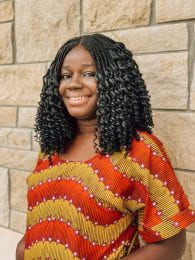



 Being a part of the Staley School of Leadership means having real-world opportunities to practice leadership. Jess Pittenger, a sophomore majoring in philosophy in the pre-law track with a minor in leadership studies, experienced this firsthand.