Kansas State University

search

IT News

Author: Cathy Rodriguez

Protect yourself from doxxing

Doxing, short for “dropping documents,” is the act of publicly exposing someone’s personal information without their consent. It can include addresses, phone numbers, workplace details, or other data that makes it easy for strangers to harass, threaten or impersonate you online.

While doxing is often associated with high-profile figures, anyone can become a target. The good news is that there are steps you can take to reduce your risk and protect your privacy.

Limit What You Share

Think twice before posting personal details online. Even small pieces of information, like your hometown, daily routines or family members’ names, can be pieced together to create a full picture of your identity. Review your social media accounts and remove unnecessary details from your profiles.

Check your privacy settings Continue reading “Protect yourself from doxxing”

Did you know you have a Zoom personal meeting ID?

Zoom makes it simple to meet with others by using your Personal Meeting ID (PMI).

PMIs are great for recurring, informal or internal meetings where the attendees are consistent and trusted. For example, you might use it for quick team check-ins or one-on-one conversations. Because the link never changes, there’s no need to send new invitations each time. However, because it is always accessible with the same meeting ID and personal Zoom link, it should not be used for back-to-back meetings or people you do not meet with regularly. Once a participant has the link to your PMI, they can join it at any time the meeting is in use, unless you lock the meeting or use the Waiting Room feature to admit participants individually.

Enabling your  PMI for instant meetings

You can set your Zoom profile to always use your Personal Meeting ID for instant meetings. This will lock this setting, so whether you are starting the instant meeting on the web, with the Zoom Desktop Client, or with the Zoom mobile app, it will use your Personal Meeting ID.

  1. Sign in to the Zoom web portal.
  2. In the navigation panel, click Profile.
  3. Click Edit to the far right of Personal Meeting ID.
  4. Check Use Personal Meeting ID for instant meetings.
  5. Click Save.

Using your PMI for instant meetings Continue reading “Did you know you have a Zoom personal meeting ID?”

10 daily habits to keep your computer secure

Securing your computer is about more than just protecting your own files. The steps you take also help safeguard the university’s systems and data. By following these practices, you reduce risks for yourself and contribute to a stronger, safer K-State network.

Install antivirus software

Antivirus is your first line of defense. It detects, blocks and removes malicious software before it can cause harm. Every university-owned computer comes with antivirus software installed and updated. Personal devices connecting to K-State’s network must also have antivirus protection in place.

Enable automatic updates Continue reading “10 daily habits to keep your computer secure”

How can you protect yourself online?

What you share online can put you at risk if you’re not careful. From limiting personal details to checking privacy settings, small steps can make a big difference in keeping your information safe.

Limit personal details

Avoid posting information that could make you vulnerable, such as your address or daily routine. If others share details about you, make sure the combined information does not reveal more than you are comfortable with. Be considerate when posting about others, including photos.

Remember, the internet is public

Only post information you are comfortable with anyone seeing. Once something is shared online, it is difficult to remove completely. Deleted information may still exist in cached or saved copies.

Be cautious with strangers Continue reading “How can you protect yourself online?”

Free IT equipment checkout for students, faculty and staff

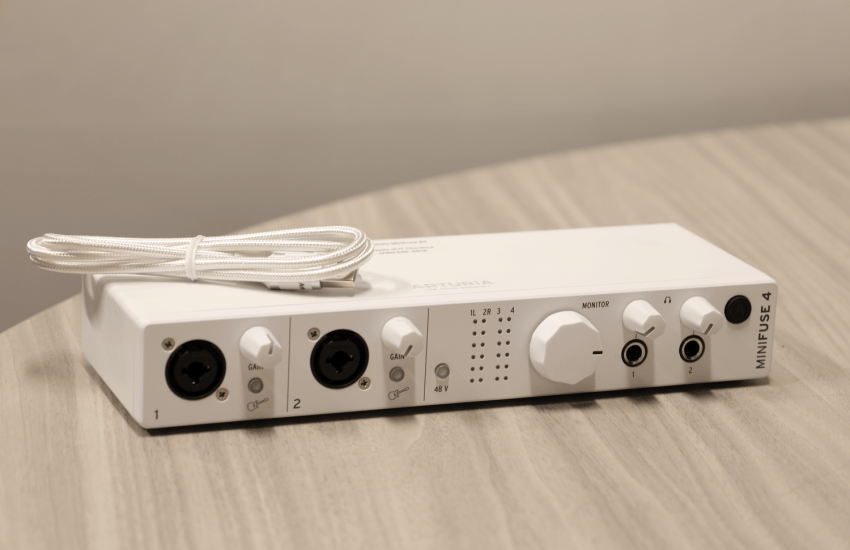
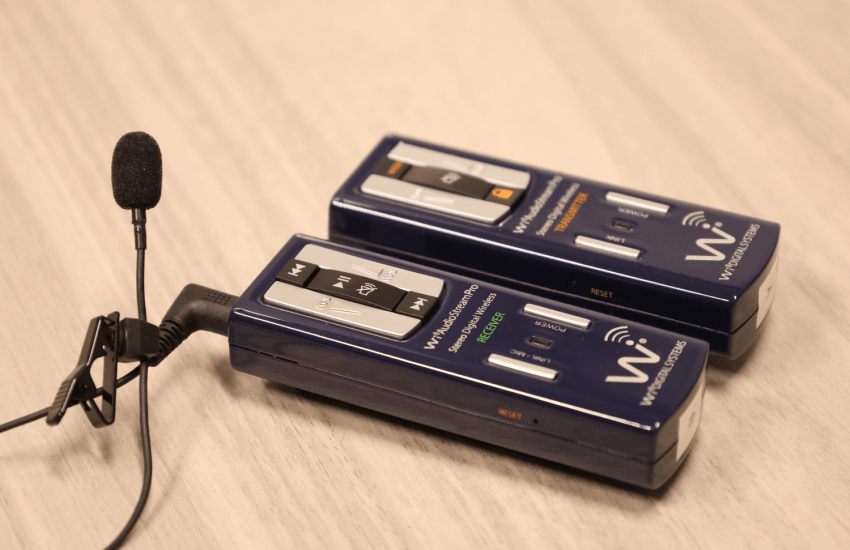
The Sunderland Foundation Innovation Lab offers a variety of IT equipment that students, faculty and staff can check out for free. Available equipment includes laptops, digital camcorders and cameras, projectors and more.

Equipment reservations can be made by calling 785-532-4918 or emailing
itcheckout@k-state.edu. Equipment can be picked up at the Sunderland Foundation Innovation Lab, Hale Library, Room 235.

Please bring the following with you when you come to checkout equipment:

  • Your eID
  • Your WID
  • Your K-State ID card
  • A direct phone number where you can be reached

See the Equipment Checkout website for details on policies, procedures, and available equipment. Office hours: 8 a.m.-5 p.m., Monday-Friday.

Create, distribute and analyze surveys using Qualtrics

Qualtrics logoQualtrics is a powerful survey tool that empowers the K-State community to collect and analyze data with ease. It is available to all faculty and staff. It’s also accessible to graduate and undergraduate students by request.

The default configuration is unlimited surveys per user with the ability for 25,000 emails, thank yous, reminders, and survey responses in a seven-day rolling period. Surveys that involve human subjects must be approved by the Institutional Review Board (IRB). See the Qualtrics Support page for more information.

Sign in to Qualtrics (https://kstate.qualtrics.com/) with your eID and password.

Highlighted Features

  • Variety of question types: multiple choice, matrix tables, text entry, descriptive text, graphics, rank order, timing, and more.
  • Library of existing surveys, questions, graphics, and messages that users can customize and use.
  • Branching and display logic so you can define user-tailored survey path.
  • Email and contact list triggers.
  • Quotas.
  • Advanced analytics.
  • Collaborate and share surveys.
  • Multiple distribution options, including Qualtrics e-mailer, survey URLs (public and private) and more.
  • Ability to monitor survey progress and send reminder and thank-you messages.
  • Ability to create reports, graphs, charts, and statistical results of response data
  • Export data in a variety of ways including SPSS and other statistical packages

Resources

Visit the IT Status Hub to stay updated on the status of K-State IT Services

Do you need to check the status of an IT service? K-State continuously monitors core IT services and related components. Service updates are available on the IT Status Hub, categorized as follows:

  • Up (green): Service is running and fully functional.
  • Affected (yellow): Service is experiencing partial disruptions.
    Note: Some services may be marked as Affected during maintenance windows or intermittent disruptions.
  • Down (red): Service is currently unavailable.

On the IT Status Hub page, you can also see notifications of any current events, a maintenance calendar and a service history.

Get Office 365 apps for free

Office 365 desktop apps are free for students and employees. These apps can be installed on up to five PCs or Macs, five tablets and five mobile devices.

A few of the available apps include:

  • Word: Create documents, research papers, resumes and more.
  • Excel: Analyze data, build charts, manage budgets and more.
  • PowerPoint: Design presentations with built-in layouts, graphics, and more.
  • Outlook: Stay on top of email, calendar events and tasks in one place.
  • OneNote: Take notes, brainstorm ideas in a hierarchical structure of notebooks, sections and pages.
  • Teams: Collaborate seamlessly with chat, video calls and file sharing. Teams serves as your hub for group work, class projects and virtual meetings.
  • OneDrive: Store files securely in the cloud and access them from any device. OneDrive makes it easy to share documents and work on them together.

Visit K-State’s Microsoft Help and Support page for installation instructions.

If you have any questions, contact the IT Service Desk:

Building a collaborative hub in Microsoft Teams

Use Microsoft Teams as a collaborative hub for teams or projects. Share files, track tasks, and collaborate on content with Microsoft Planner, Loop and Lists.

Start by creating a team

The foundation of your hub is a well-structured team. Create a team for your department, project or working group. Then add members who need access.

Learn more.

Organize with channels

Channels are where collaboration takes place.. Create channels for core functions, such as “General,” “Projects,” or “Announcements.” Then, add channels for specific initiatives, topics or workflows. Clear naming conventions keep everyone on the same page and help new members quickly find what they need.

Learn more.

Keep conversations flowing Continue reading “Building a collaborative hub in Microsoft Teams”

Find contact information for K-Staters using the K-State People Search Directory

Would you like to contact someone at K-State but don’t have their contact information? Use the K-State People Search Directory to find contact information for students, faculty, and staff.

To access the directory, visit the K-State People Search Directory or type in your search at the top of any K-State web page and select the people tab.

People Search Directory webpage

Student information

Student personal information will not be shown unless you are signed in with your K-State credentials. If you are signed in, the following information will be displayed:

    • Name (preferred name)
    • Student Classification (e.g., Freshman, Sophomore, Junior, Senior)
    • Major
    • Email

Faculty/staff information Continue reading “Find contact information for K-Staters using the K-State People Search Directory”