Kansas State University

search

Extension Entomology

Month: April 2019

Alfalfa Weevil Update

— by Dr. Jeff Whitworth and Dr. Holly Davis

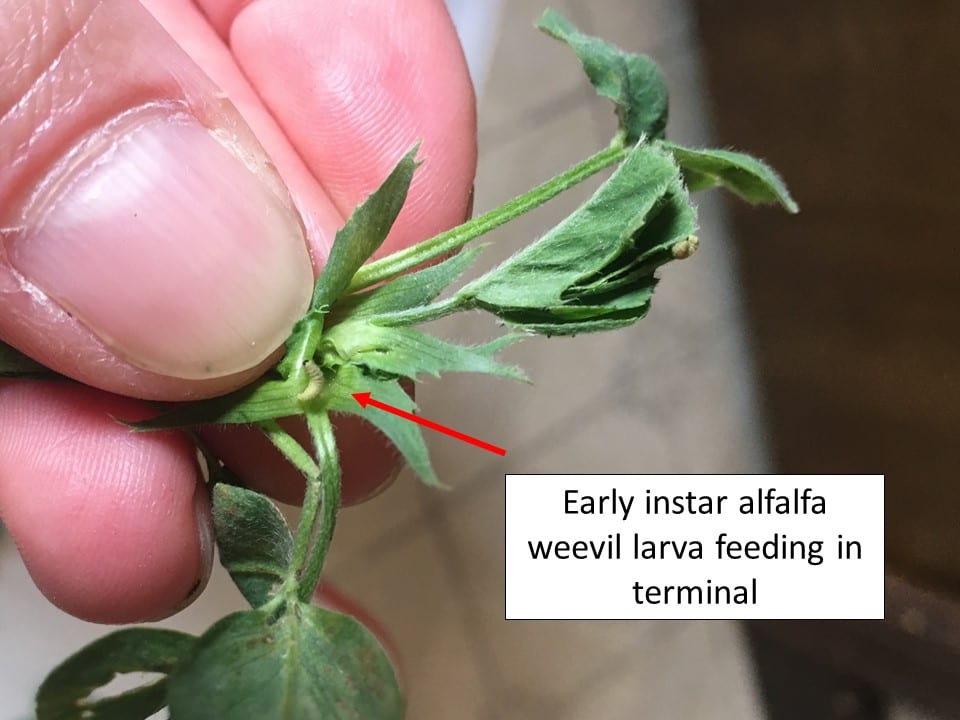
Alfalfa weevil development is/has proceeded quite rapidly, and many fields have required an insecticide application.  Pictured here is a representative sample of alfalfa plants from a non-treated field and a close-up from that field.

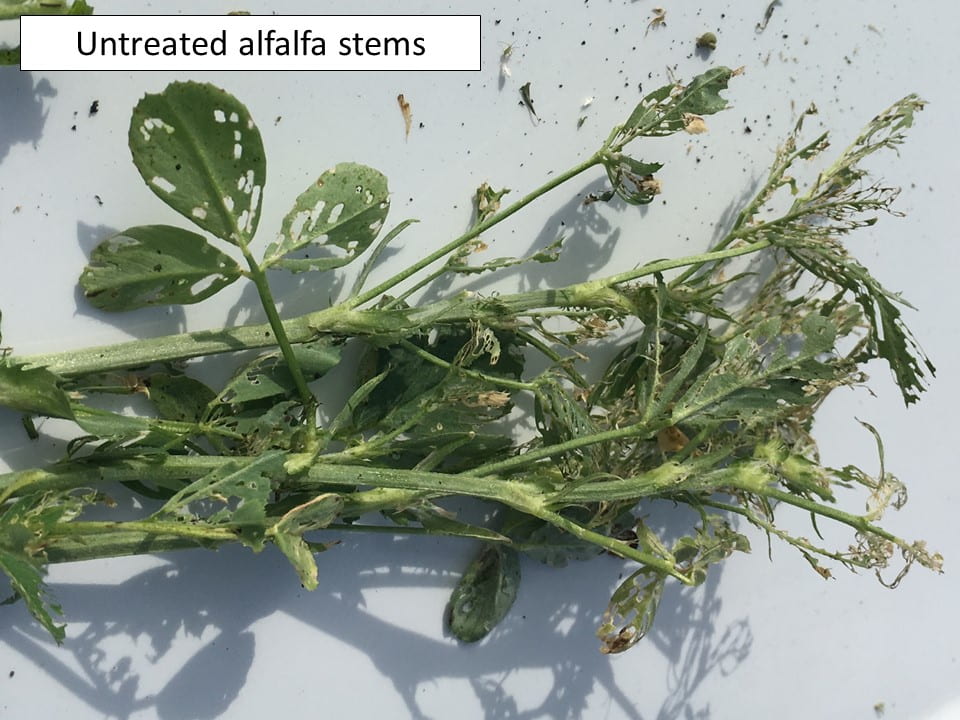
Using the stem shake bucket method of sampling, this untreated field still had an average of 8+ larvae/stem at different developmental stages.  Plus, pupation had already begun in that field.

In contrast are the plants representative of a field that was treated on 5 April, which had already exceeded the 1 larva/ 2 stems, or 50% infested, treatment threshold.  However, larvae are still hatching and developing, and the feeding damage is starting to become apparent again.
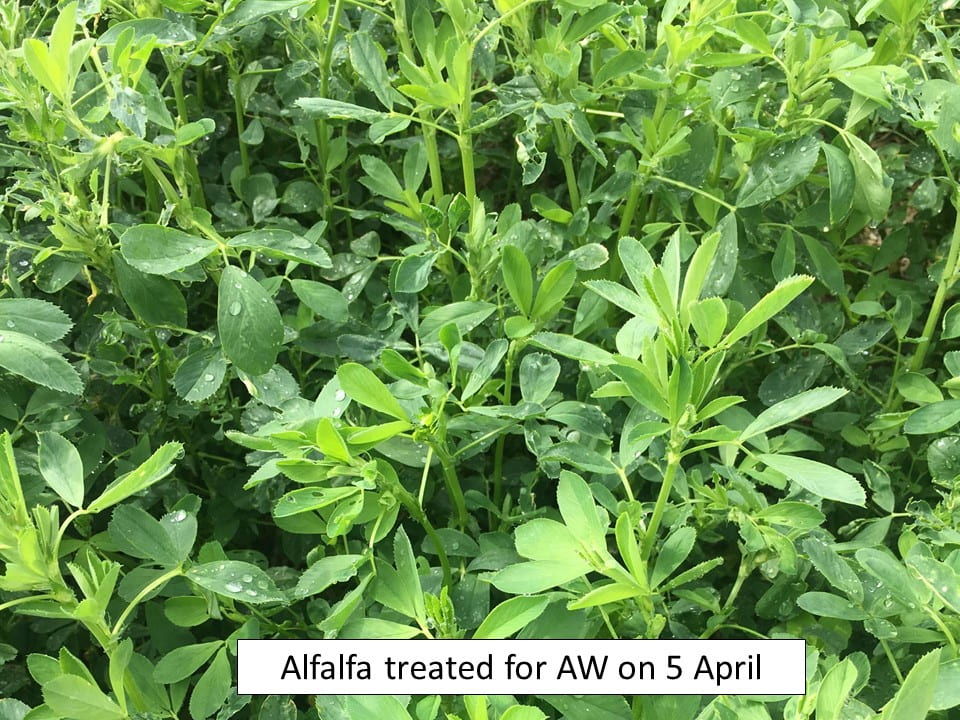
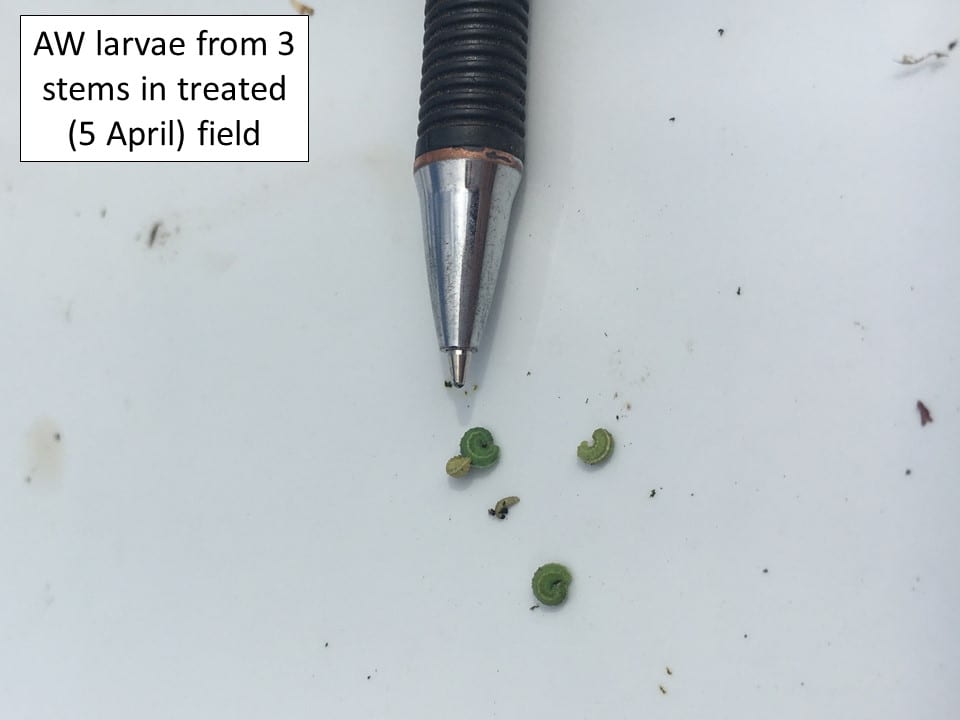
 

Thus, alfalfa fields should continue to be monitored for at least another 10-14 days for the need of a 2nd insecticide application or, if possible, swathing.  If insecticide applications are deemed warranted, be sure to check the label for the pre-harvest interval (PHI) requirement for the insecticide used.

For more information regarding alfalfa weevil management please refer to the KSU Alfalfa Insect Management Guide:  https://www.bookstore.ksre.ksu.edu/pubs/mf809.pdf
Alfalfa Weevil Update

–by Dr. Jeff Whitworth and Dr. Holly Davis


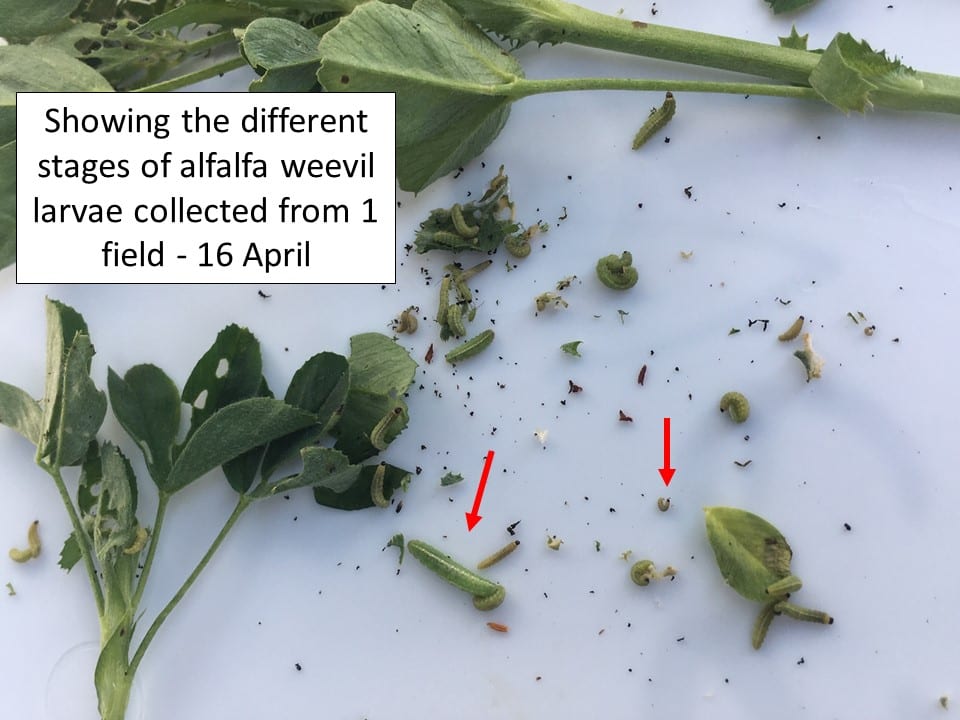
Alfalfa weevil populations seem to have “exploded” around north central Kansas in the past week.  Tiny alfalfa weevil larvae were first detected in NC KS on 5 April, but probably a few started hatching a day or two prior.  However, the infestation levels that were detected on 5 and 6 April were all well below 10%, and mostly less than 1%.  In contrast, fields sampled on 16 April all greatly exceeded 100% infested using the stem shake bucket method and large numbers of different stages of larvae were detected.


To sample using the shake bucket method, randomly select individual alfalfa stems and quickly and vigorously shake them into a small white bucket.  Then, count the number of dislodged larvae in the bucket and divide by the number of stems to get the infestation level.  For example, 15 larvae from 10 stems = an average of 1.5 larvae/stem.  Do this in several areas throughout each field to get a good indication of the alfalfa weevil infestation level and the stage of development of the weevil.  One of the problems with the shake bucket method is that some stems have several larvae/stem while others have none (yet).  Thus, the infestation level may appear to be higher than is the actual infestation.


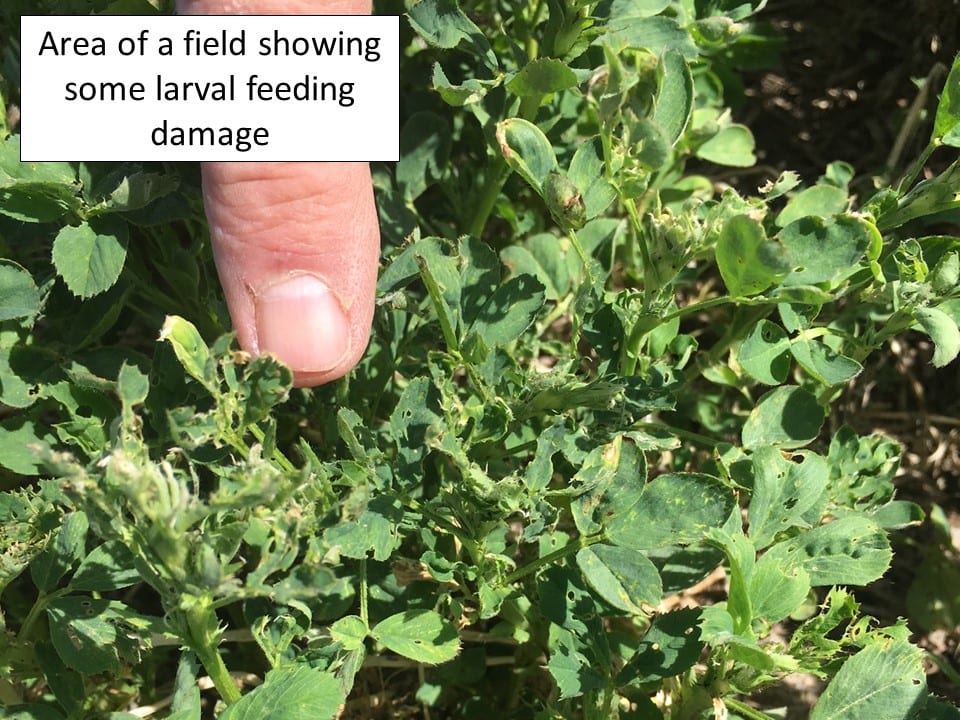
However, in NC KS, with as many larvae as there are already (with more to come probably) and as much damage as we are starting to see in spots, it may be prudent to treat fields as soon as possible.


For information on insecticides registered for use for alfalfa weevil control, please see the KSU Alfalfa Insect Management Guide: https://www.bookstore.ksre.ksu.edu/pubs/mf809.pdf


Common Asparagus Beetle

–by Dr. Raymond Cloyd

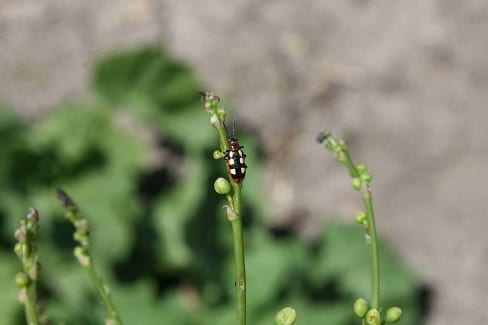
If you are growing asparagus then it is that time of year to be aware of the only insect pest of asparagus; the common asparagus beetle, Crioceris asparagi. Adult beetles are 1/4 inch long. The body is metallic blue to black with red margins and six cream-colored markings (Figure 1).

Figure1. Common Asparagus Beetle Adult (Author–Raymond Cloyd, KSU)

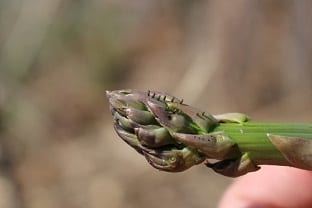
Adults emerge from the soil in early spring and fly to new asparagus shoots where they mate and feed. Females lay up to 30 eggs on the end of spear tips as they emerge from the soil (Figure 2)

Figure2. Common Asparagus Beetle Eggs on Spear Tip of Asparagus (Author–Raymond Cloyd, KSU)

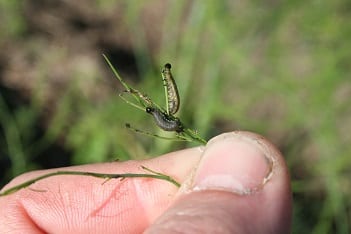
Larvae hatch from eggs after about a week, migrate onto the ferns, and commence feeding. The larvae look like a small slug. They are wrinkled, 1/3 inch in length, and olive-green to gray with black heads and legs (Figure 3).


Figure3. Common Asparagus Beetle Larvae Feeding on Asparagus (Author–Raymond Cloyd, KSU)

Larvae feed for approximately two-weeks and then drop to the ground, burrow into the soil, and form a yellow pupa. After several weeks, adults emerge and start feeding. Common asparagus beetles overwinter underneath plant debris, loose bark, or hollow stems of old asparagus plants. The life cycle can be completed in eight-weeks. There are two generations in Kansas.

The adults and larvae feed on asparagus spears and can defoliate ferns if populations are extensive. Larvae consume leaves and tender buds near the tips, which leaves scars that eventually turn brown. Damage caused by larvae interferes with the plant’s ability to photosynthesize (manufacture food); thus depleting food reserves for next year’s crop.

The plant protection strategies that can be implemented to reduce problems with common asparagus beetle populations include: applying insecticides; hand-picking eggs, adults, and larvae and placing into a container with soapy water; and/or removing any plant debris after the growing season to eliminate overwintering sites for adults. Insecticides should be applied as soon as common asparagus beetles are present, and again in late summer through early fall to kill adults before they overwinter. Thorough coverage of all plant parts is important in suppressing populations.


Ant and Termite Swarms

— by Dr. Jeff Whitworth and Dr. Holly Davis


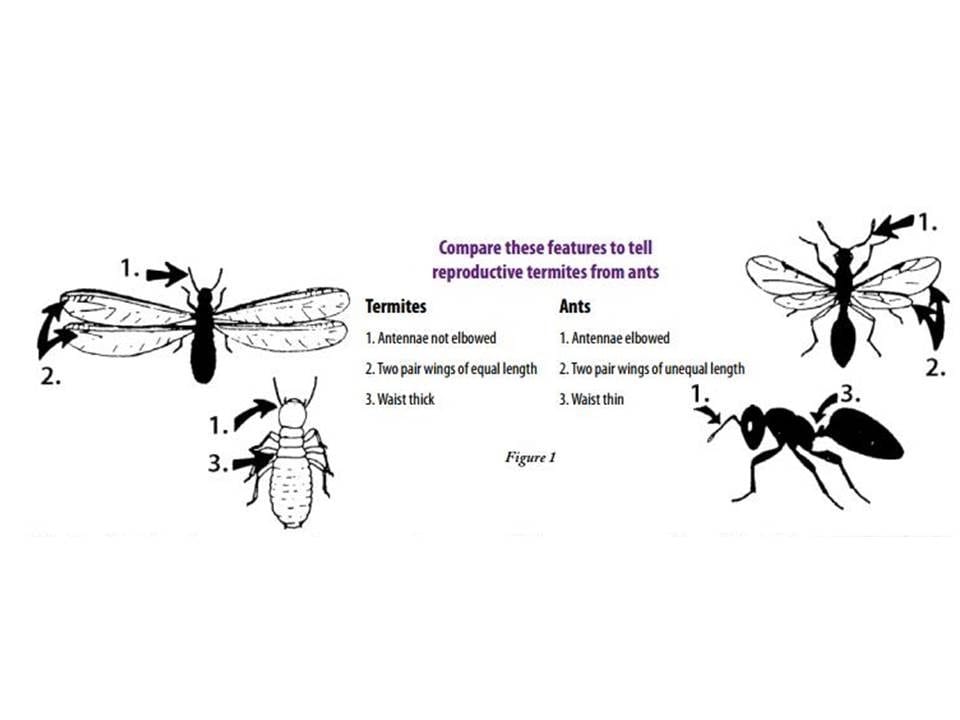
April is usually the month that most ant and/or termite swarms occur.  Thus, it is extremely important to distinguish between an ant and a termite.  Ant swarms have already been noted (5 April) this year with more to come. Both ants and termites are very common throughout Kansas although the damage potential and treatments costs are significantly different.  Therefore, proper identification is extremely important!


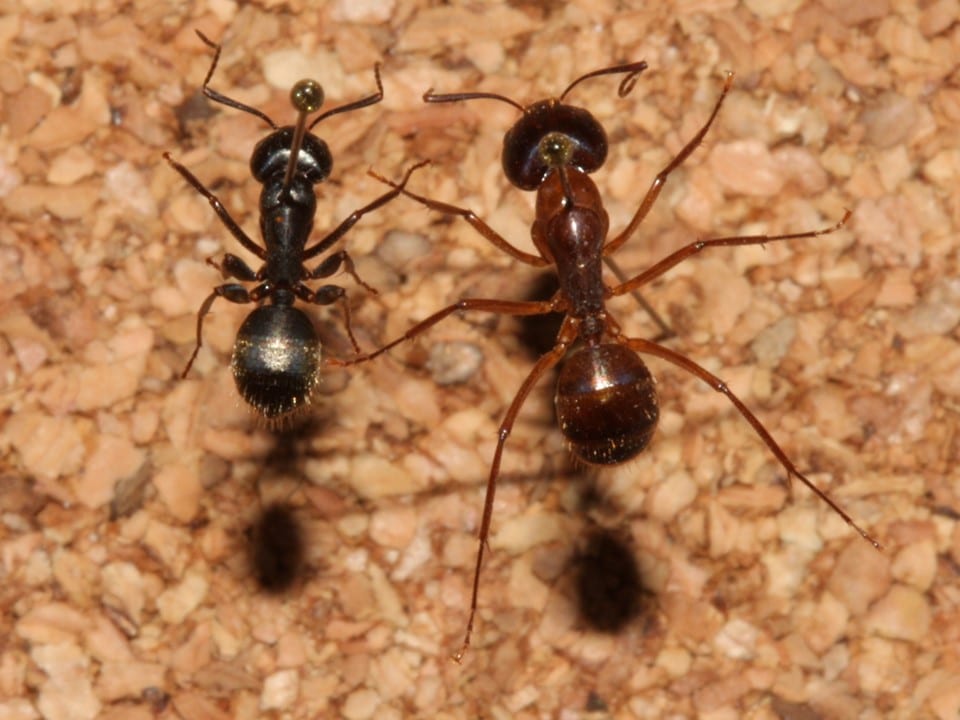
If the swarm is determined to be ants, the next question is whether they are carpenter ants.  Most of our ants are scavengers and therefore won’t really cause a problem, other than being a nuisance.  Carpenter ants are also scavengers; however, they do excavate and nest in soft woods including plywood, plasterboard, insulation, wood affected by water seepage, etc.  Unlike termites, they do not consume wood and wood products.  Carpenter ants range in size from ¼ inch to nearly 1 inch long and may be reddish to black in color, making them look very similar to many other ant species in Kansas.  For many, the easiest characteristic to positively identify carpenter ants is the tiny ring of hairs on the very end of the abdomen, which may require a hand lens to see.  Treatment for carpenter ants, as with most ants, is most effective by locating and treating the nest.


Showing red and black carpenter ants

For more information on ants, including carpenter ants, please see Ants, MF-2887: https://www.bookstore.ksre.ksu.edu/pubs/mf2887.pdf


Alfalfa Weevils

— by Dr. Jeff Whitworth and Dr. Holly Davis

Very small alfalfa weevil larvae were 1st detected on 5 April, 2019 in north central Kansas.  Every field sampled had at least one newly hatched larva.  There were not enough to sample for a treatment threshold as they are just hatching.  The 1st indication of these small larvae are visible, but very tiny, pinholes in leaves, or a little chewing on plant terminals.  These tiny larvae are quite difficult to dislodge from their feeding sites when they are this small.  Thus, sampling at this early stage to determine an infestation level is not practical using the bucket-shake method or a sweep net.