–by Dr. Raymond Cloyd
Q: What do you call two spiders that just got married?
A: Newly-webs.
–by Dr. Raymond Cloyd
Q: What do you call two spiders that just got married?
A: Newly-webs.
–by Dr. Jeff Whitworth and Dr. Holly Davis
Soybeans appear to be relatively pest free at the present time – but looks can be deceiving. There are a few small green cloverworms, thistle caterpillars, soybean podworms (corn earworms) and webworms, along with stink bugs and spider mites.
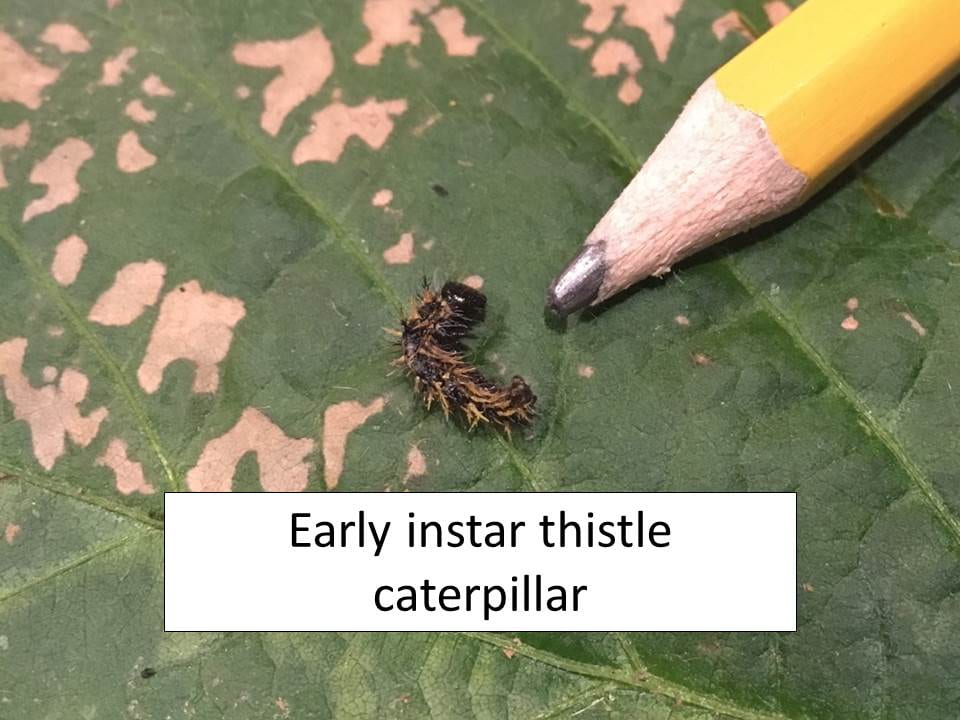
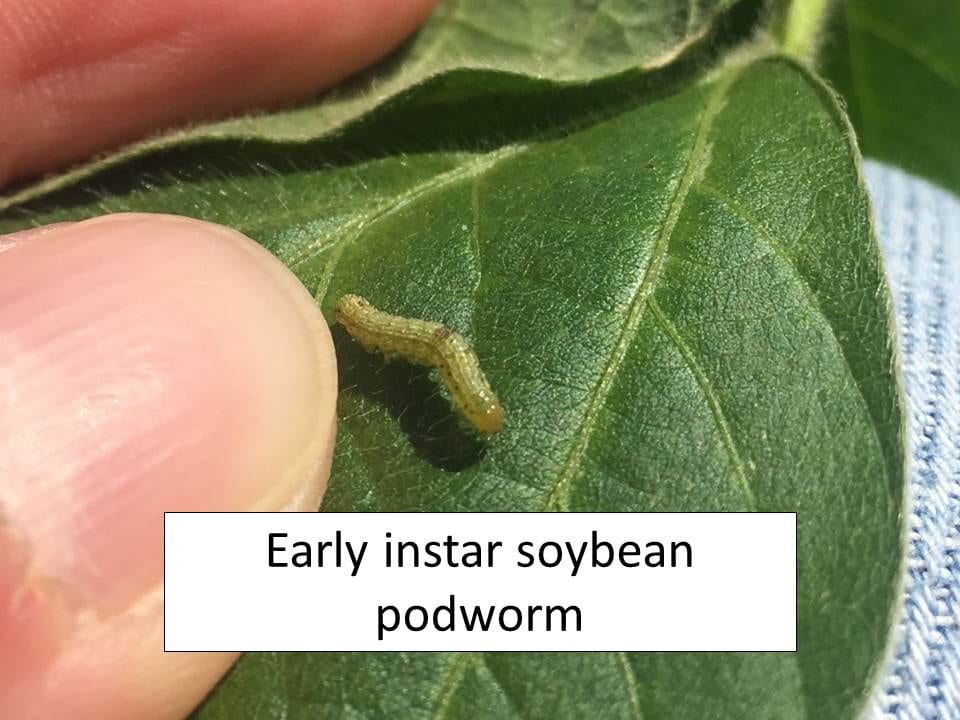
These pests are probably only going to increase in the next few weeks. Bean leaf beetle adults will also likely be emerging and showing up in fields soon. As the beans continue to develop so will the pests, thus monitoring should continue until beans senesce.
–by Dr. Jeff Whitworth and Dr. Holly Davis
Much of the sorghum around north central Kansas is at, or just coming into, the whorl stage. As the leaves unfurl and grow out of the whorls, a pretty high number of plants are showing large holes that have been chewed in leaves. These holes are from smaller larvae (most that we have sampled are corn earworms) that feed on the leaves while they are still furled. When leaves grow out of the whorl they have showy, ragged looking feeding that may cause concern.

Larvae sampled this week still have about one additional week of feeding within these whorls, then they will exit and crawl down the plant to pupate in the soil. Larvae in the whorl are rarely worth spraying for four reasons: 1) by the time the leaves unfurl making feeding damage visible, most larvae have already accomplished most of their development and thus feeding, 2) insecticides usually can’t penetrate far enough down into the whorl to actually impact the larvae, 3) a general insecticide will kill most beneficial insects, and 4) ragged looking leaves during this stage have little to no effect on yield, and no, you cannot eliminate the next generation by spraying this generation.
–by Dr. Raymond Cloyd
Green June beetle, Cotinis nitida, adults are actively flying around in massive numbers near managed and/or unmanaged grassy areas, and ‘bumping’ into people and objects. Adults are 3/4 to 1.0 inch long, velvety-green, and tinged with yellow-brown coloration (Figure 1). Green stripes with yellow-orange margins extend lengthwise on the front wings. The underside of the body is distinctly shiny and metallic green or gold. Adults resemble ‘dive bombers’ flying around for several weeks in July. Green June beetle adults are sometimes confused with Japanese beetle (Popilla japonica) adults—but they really do not look alike (Figures 2 and 3).
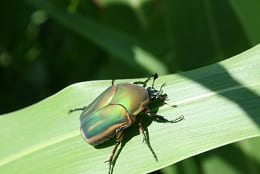
Fig 1. Green June Beetle Adult (Auth–Raymond Cloyd, KSU)

Fig 2. Green June Beetle Adult (Auth–Raymond Cloyd, KSU)
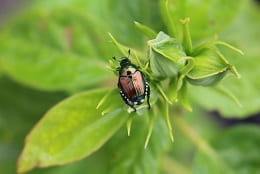
Fig 3. Japanese Beetle Adult (Auth–Raymond Cloyd, KSU)
Green June beetle has a one-year life cycle, and overwinters as a mature larva or grub. Adults generally emerge in late-June and are active during the day, resting at night on plants, in thatch, or in compost. Adults produce a sound similar to that of bumble bees. Adults will feed on ripening fruits and corn tassels, and may occasionally feed on plant leaves. Male beetles swarm in the morning, ‘dive bombing’ to-and-fro just above managed and/or unmanaged grassy areas where females are located. Females emit a pheromone that attracts the males. Clusters of beetles may be seen on the surface of the soil or in grassy areas with several males attempting to mate with a single female, resulting in an ‘insect orgy.’
Mated females that survive the ‘experience’ will lay clusters of 10 to 30 eggs in moist soil containing a high amount of organic matter. Eggs hatch in about two weeks, in early August, and young larvae feed near the soil surface. The larvae feed primarily on organic matter including thatch and grass-clippings; preferring material with a high moisture content. Larvae are 3/8 (early instars) to 1.5 (later instars) inches long, and exhibit a strange behavioral trait—they crawl on their back—likely due having a constant itch.
–by Dr. Raymond Cloyd
Q: Why do ants smell so good?
A: Because they use Deodor-ANT!