–by Dr. Raymond Cloyd
European pine sawfly, Neodiprion sertifer
Spruce spider mite, Oligonychus ununguis
Lilac/ash borer, Podosesia syringae
–by Dr. Raymond Cloyd
European pine sawfly, Neodiprion sertifer
Spruce spider mite, Oligonychus ununguis
Lilac/ash borer, Podosesia syringae
–by Raymond Cloyd
The Kansas Honey Producers Association appreciates Kansas State University extension agents and all the work they do across the state for pollinators including honey bees. We would like to offer support during these challenging times. With the focus on home and health, we are seeing an increased interest in beekeeping across the state. The Northeastern Kansas Beekeepers Association offers beginning classes associated with beekeeping each year. Because of the need to distance ourselves, our classes are held remotely. Although this has some disadvantages, the classes are recorded. The private YouTube links to both classes are provided below. The first class is “Beginning Beekeeping” and provides information on biology, acquiring bees, basic diseases, colony growth, and seasonal management. The second class is “Year 2 and Bee-Yond,” which focuses on topics related to individuals with some beekeeping experience. Topics include why hives die, making splits and requeening a hive, management of varroa mite, and extracting honey. The classes are available to members of the Northeastern Kansas Beekeepers Association for $5.00 but these classes are being offered free to extension agents. We ask that you respect our work and if others would like to view the programs, please direct them to our web site: www.nekba.org. Questions and requests for assistance may be sent to Becky Tipton, President of the Kansas Honey Producers Association at bstbees@embarqmail.com or 785-484-3710.
Beginning Beekeeping: https://www.youtube.com/playlist?list=PL-ODXdd1Vl4knXZL7IcjeBhVIGu3bcdju
Year 2 and Bee-Yond: https://www.youtube.com/playlist?list=PL-ODXdd1Vl4k0DQmqCvLszBrs6zJtOR94
— Dr. Raymond Cloyd
The larvae (caterpillars) of the Eastern tent caterpillar, Malacosoma americanum, are emerging (eclosing) from their eggs and feeding on the leaves of trees and shrubs (Figure 1).

Figure 1. Eastern tent caterpillar feeding on new leaves (Raymond Cloyd, KSU)
After caterpillar’s emerge from the eggs, they create a distinct white, silken nest (or tent) in the branch crotches of trees and shrubs (Figure 2) including: birch, crabapple, hawthorn, mountain ash, poplar, willow, and flowering cherry, peach, and plum. The nest protects caterpillars from cold temperatures and natural predators.
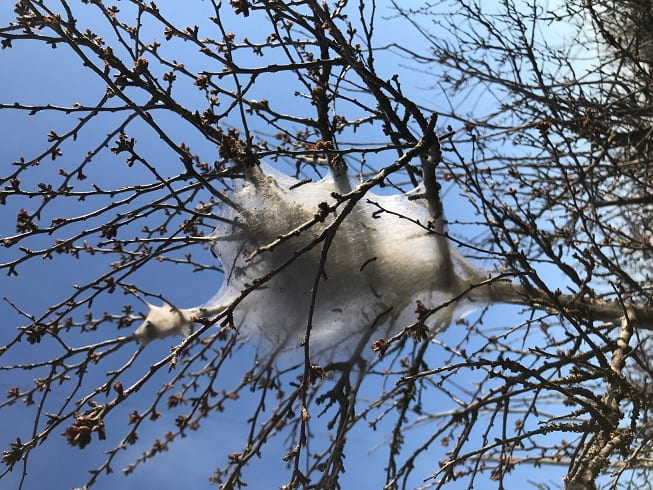
Figure 2. Eastern tent caterpillar nest (Sean Mills)
Caterpillars are black and have a white stripe extending the length of the body along with blue markings on both sides of the body (Figure 3). There are five larval instars (stages between each molt). Eastern tent caterpillar is one of our earliest caterpillar defoliators in the season, feeding on newly emerged leaves, which can reduce the ability of trees and shrubs to produce food by means of photosynthesis. Although feeding damage may not directly kill a tree or shrub, a decrease in photosynthesis can predispose plants to secondary pests such as wood-boring insects. Leaf quality can influence tree and shrub susceptibility. For instance, black cherry, Prunus serotina, trees grown in the shade are fed upon less by Eastern tent caterpillars due to lower leaf nutritional quality.
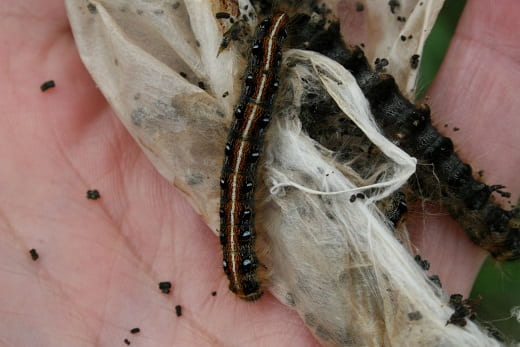
Figure 3. Eastern tent caterpillar (Raymond Cloyd, KSU)
The young or early instar (1st through 3rd) caterpillars are active during the daytime and reside in the silken nest at night. During the day caterpillars emerge from the silken nest and feed on plant leaves. On over-cast or cloudy days caterpillars will remain inside the silken nest. The final instar (5th) caterpillar only feeds at night. The length time of time that caterpillars spend feeding increases 4-fold between the 1st and 5th instars. Feeding activity depends on temperature with caterpillars feeding for a longer period of time when exposed to warmer temperatures than cooler temperatures. Eastern tent caterpillar overwinters as an egg mass attached to the branches or small twigs (Figure 4). There is one generation per year in Kansas.

Figure 4. Eastern tent caterpillar egg mass attached to branch (Raymond Cloyd, KSU)
The silken nests can be physically removed or disrupted by hand. You can destroy, disrupt, or open-up the silken nest using a rake or a high-pressure water spray. The young exposed caterpillars are susceptible to consumption by birds. However, the later instars are fed upon less because the hairs on the body deter birds from feeding on them.
Spray applications of the bacterium, Bacillus thuringiensis subsp. kurstaki, or spinosad are effective in killing small (young) caterpillars and suppressing minor infestations of Eastern tent caterpillar. These insecticides are stomach poisons so caterpillars must ingest the material to be negatively affected. When caterpillars are mature and approximately 2 inches long, then pyrethroid-based insecticides, such as bifenthrin, cyfluthrin, and lambda-cyhalothrin should be applied. It is important to apply insecticides when caterpillars are active during the daytime to increase exposure to the insecticide. However, pyrethroid-based insecticides are harmful to pollinators (e.g. honey bees) and beneficial insects. Therefore, do not apply pyrethroid-based insecticides when pollinators are active. For more information on managing Eastern tent caterpillar populations contact your county or state extension specialist.
–by Frannie Miller
The Pesticide Safety and Integrated Pest Management Program is hosting an insect-themed art contest for Kansas 4-Her’s and art students. This year the artwork needs to fit into the contest theme of “Exploring Pollinators.” The goal is to explore what pollinators do and why they are important and create an art piece that captures that information. Selected artwork will be used to promote pollinator week (June 21-27, 2021) and create other educational items. The program encourages youth to get your creative hats on and create an entry before the April 16, 2021 deadline. Entries must feature an insect as the central focus of the art. More information on the rules and how to submit an entry can be found at: https://www.ksre.k-state.edu/pesticides-ipm/ or you can e-mail fmiller@ksu.edu to have the rules e-mailed to you.
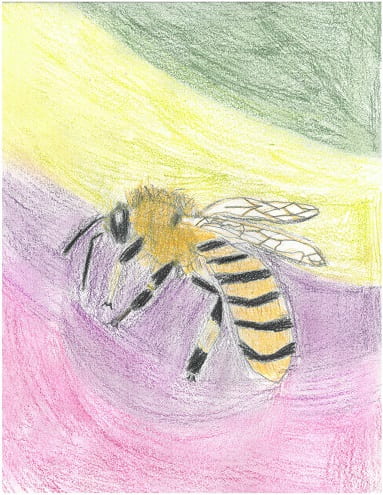
Honeybee by Emma Good

Silverfish by Leeann Skinner
–by Frannie Miller
Are you an applicator that is still short some hours to renew your 2020 commercial applicator license or just want to get credits to renew this year? If your license expired during the COVID-19 State Disaster Emergency (2020) it shall remain valid until 90 days following the termination of the emergency declaration (date yet to be determined). The Kansas State Pesticide Safety Program is providing a training opportunity this April for several of the categories to help these individuals renew. This training will be offered in a virtual format via zoom. These will be the only trainings offered by the program this spring. In order to hold the training, we must have at least 20 registered participants.
Training dates and categories:
April 21-22: Right-of-Way, Industrial Weed, and Noxious Weed (7 hours 6, 7C & 9A plus core)
April 28-29: Forestry, Ornamental, Turf and Interiorscape (5 hours 2/3C, 7 hours 3A/3B plus core)
April 30: Ag Plant (7 hours 1A plus core)
Training information is available at https://www.ksre.k-state.edu/pesticides-ipm/commercial-applicator.html or e-mail fmiller@ksu.edu to have the flyer e-mailed to you!