Kansas State University

search

Extension Entomology

Category: Horticulture

Brownheaded Ash Sawfly

Brownheaded ash sawfly larvae congregating at the base of a green ash tree.

By Raymond Cloyd, Professor and Extension Specialist in Horticultural Entomology/Plant Protection.

We have received several inquiries regarding caterpillar like insects feeding on green ash (Fraxinus pennsylvanica) trees. The insects in question are larvae of the brownheaded ash sawfly, Tomostethus multicinctus, which are sporadic, early season, defoliating insect pests. The larvae feed extensively causing noticeable leaf damage and producing frass or fecal material.

Figure1. Larva of brownheaded ash sawfly (Raymond Cloyd)
Figure1. Larva of brownheaded ash sawfly (Raymond Cloyd).

Brownheaded ash sawfly larvae are approximately 15 to 20 millimeters (1/2 to 3/4 of an inch) long, yellow green, with white and green stripes extending the length of the body (Figure 1). The larvae have a brown head, and there are prolegs (fleshy, leg like appendages) on every segment of the body, which distinguishes sawfly larvae from caterpillars. Brownheaded ash sawfly larvae feed primarily on green and white ash trees. Adults are wasp like in appearance. Brownheaded ash sawfly pupate in the spring, with adults emerging and females laying eggs inside leaves. Larvae emerge (eclose) from eggs and congregate in groups, feeding from May through June.

Figure 2. Damage to leaves caused by brownheaded ash sawfly larvae (Raymond Cloyd)
Figure 2. Damage to leaves caused by brownheaded ash sawfly larvae (Raymond Cloyd).

Larvae create shot holes or pin holes on young leaves (Figure 2), but as they increase in size, the larvae consume entire leaves, especially terminal leaves (except the main veins), resulting in almost complete defoliation. By June, larvae are fully grown and shed a papery like skin that is attached to the leaf (Figure 3). The larvae move toward the base of the tree and construct protective cocoons. High numbers of larvae may be present at the base of trees (Figure 4). Brownheaded ash sawfly overwinter as full grown larvae or pre pupae within silken lined cells located on the top of the soil at the base of previously infested trees. There is one generation per year in Kansas.

Figure 3. Shed skin of brownhead ash sawfly (Raymond Cloyd)
Figure 3. Shed skin of brownhead ash sawfly (Raymond Cloyd).
Figure 4. Brownheaded ash sawfly larvae at base of tree (Raymond Cloyd)
Figure 4. Brownheaded ash sawfly larvae at base of tree (Raymond Cloyd).

Rainfall will quickly remove larvae from trees. In addition, the larvae can be removed by hand and placed into a container of soapy water to kill them. An insecticide application is not warranted unless brownheaded ash sawfly larval populations are causing extensive damage that compromises the aesthetic value of an ash tree. Insecticides with contact activity can be applied, but thorough coverage of the tree canopy, in particularly, the leaf undersides, is important. Do not apply an insecticide containing the active ingredient, Bacillus thuringiensis subsp. kurstaki, because the product will not kill sawfly larvae.

For more information on brownheaded ash sawfly, you can access the following extension publication:

Cloyd, R. A. 2016. Brownheaded ash sawfly. Kansas State University

Agricultural Experiment Station and Cooperative Extension Service. Kansas State University; Manhattan, KS. MF3297. 2 pages.

http://www.bookstore.ksre.ksu.edu/pubs/MF3297.pdf

Related: Brownheaded ash sawfly

Good for the Garden: Praying mantids prey on insects

praying mantid

A natural way to keep gardens safe from hungry pests is to employ the help of praying mantids. Kansas State University entomologist Raymond Cloyd said this predator of the insect world can be beneficial to a home garden.

“They eat anything they can grab onto with their raptorial front legs,” Cloyd said, “including flies, crickets, moths, butterflies, wasps and caterpillars.”

Continue reading “Good for the Garden: Praying mantids prey on insects”

Proposed listing of the monarch butterfly as a threatened species

monarch on a flower

The U.S. Fish and Wildlife Service (FWS) is proposing to list the monarch butterfly as a threatened species under the Endangered Species Act (ESA) in the 48 contiguous states. A threatened listing under the ESA can modify or exempt certain species protections to balance conservation efforts with economic impacts. It allows flexibility to incentivize positive conservation actions. Details about prohibitions and exceptions are available on the FWS website.

Continue reading “Proposed listing of the monarch butterfly as a threatened species”

Insect Diagnostics 2022 Season Summary

–by Anthony Zukoff – Entomology Southwest Research and Extension Center
Garden City, KS.

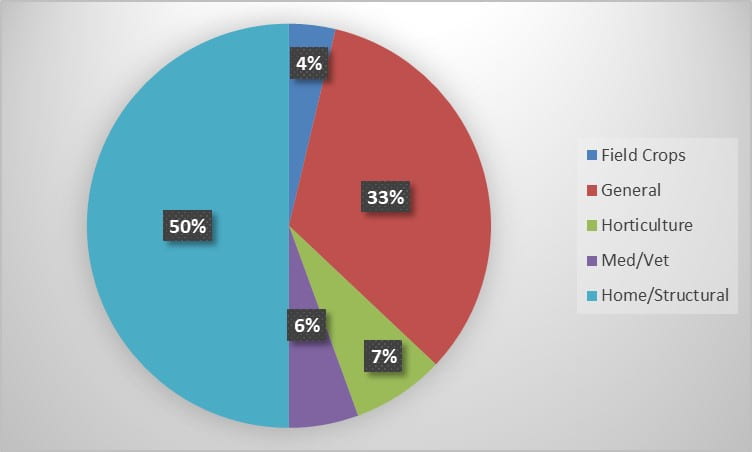
Figure 1. Percent of total inquiries received for each request category during the 2022 season.

Insect diagnostic services are available to members of the public seeking assistance identifying an insect or suspected insect related problems. The Insect Diagnostics ID Request Form can be accessed online and after providing observation information such as location and date of the sighting along with answering a set of questions intended to help with the identification process, one can then upload up to 3 photos and submit the form.  The inquiry is then forwarded on to one of the entomology extension specialists.  Within a few days, usually less than two, the identity of the insect along with appropriate life history information and/or control measures is then sent to the client by email or phone.   The online submission process takes only a few minutes and can be accessed with desktop computers and mobile devices. Continue reading “Insect Diagnostics 2022 Season Summary”

Army Cutworm Moths Still Flying in Southwest Kansas

–by Anthony Zukoff – Entomology Southwest Research and Extension Center
Garden City, KS

Noticeable numbers of army cutworm moths, also called Miller moths, have been observed in a couple locations in western Kansas this year.  Army cutworms are late fall and early spring pests of several Kansas crops, especially wheat.  These moths begin migrating into Kansas and neighboring states in the fall from their over-summering locations in the Rocky Mountains.  This year, moths began showing up in western Kansas during the first week of September.  In the last six weeks, over 1600 moths have been collected in pheromone traps at a location in Finney County.  Trap counts of 800 or more moths in an area may indicate increased caterpillar activity the following spring.  Right now, females will be laying eggs on the soil surface of freshly cultivated, weedy or newly seeded winter wheat fields.  Each female can lay up to 1000 eggs or more.  After hatching, caterpillars will begin feeding and do so until cold weather forces them below ground.  However, it is possible for them to resume feeding on warmer winter days.  Caterpillars will complete their growth next spring and then burrow into the soil to pupate. Sexually immature adults emerge in late spring and migrate back to the mountains for summer.  Fields should be scouted during warm periods between February and April.  Fields under stressful conditions, such as the current drought, may suffer economic damage with only 1-2 caterpillars per square foot. Typically, treatment will not be necessary until populations average 4-5 per square foot and well-tillered fields under good growing conditions can tolerate up to 10 per square foot without measurable yield loss. More information regarding control options for this pest in wheat and other crops can be found in the KSRE Insect Management Guides.

Army cutworm moths in a pheromone trap in Finney County