–by Dr. Raymond Cloyd
Green June beetle, Cotinis nitida, adults are flying around in massive numbers near managed and/or unmanaged grassy areas, and occasionally ‘bumping’ into people and objects. Adults are 3/4 to 1.0 inch long, velvety-green, and tinged with yellow-brown coloration (Figures 1 and 2).

Figure 1. Green June Beetle Adult (Raymond Cloyd, KSU)

Figure 2. Green June Beetle Adult (Raymond Cloyd, KSU)
Green stripes with yellow-orange margins extend lengthwise on the front wings. The underside of the body is distinctly shiny and metallic green or gold. Adults resemble ‘dive bombers’ flying around for several weeks in July. Green June beetle adults are sometimes confused with Japanese beetle (Popilla japonica) adults; however, they really do not look alike (Figures 3 and 4).
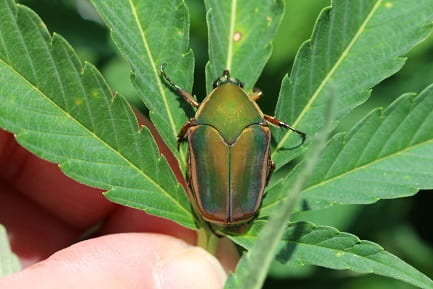
Figure 3. Green June Beetle Adult (Raymond Cloyd, KSU)

Figure 4. Japanese Beetle Adult (Raymond Cloyd, KSU)
Green June beetle has a one-year life cycle, and overwinters as a mature larva or grub. Adults generally emerge in late-June and are active during the day, resting at night on plants, in thatch, or in compost. Adults produce a sound similar to that of bumble bees. Adults feed on ripening fruits (Figure 5) and corn tassels, and may feed on the leaves of oak and maple trees. Male beetles swarm in the morning, ‘dive bombing’ to-and-fro just above managed and/or unmanaged grassy areas where females are located. Females emit a pheromone that attracts the males. Clusters of beetles may be seen on the surface of the soil or in grassy areas with several males attempting to mate with a single female, resulting in an ‘insect orgy.’ Mated females that survive the ‘experience’ will lay clusters of 10 to 30 eggs in moist soil that contains high amount of organic matter.
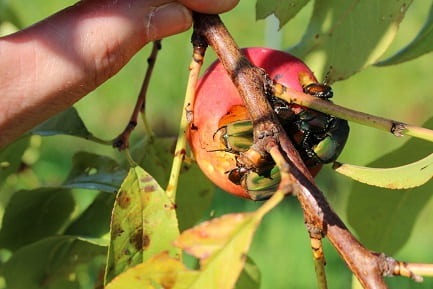
Figure 5. Green June Beetle Adults Feeding On Fruit (Raymond Cloyd, KSU)