Kansas State University

search

Extension Entomology

Tag: potato leafhopper

Alfalfa Update – Alfalfa caterpillars and Potato leafhoppers

–by Dr. Jeff Whitworth and Dr. Holly Schwarting

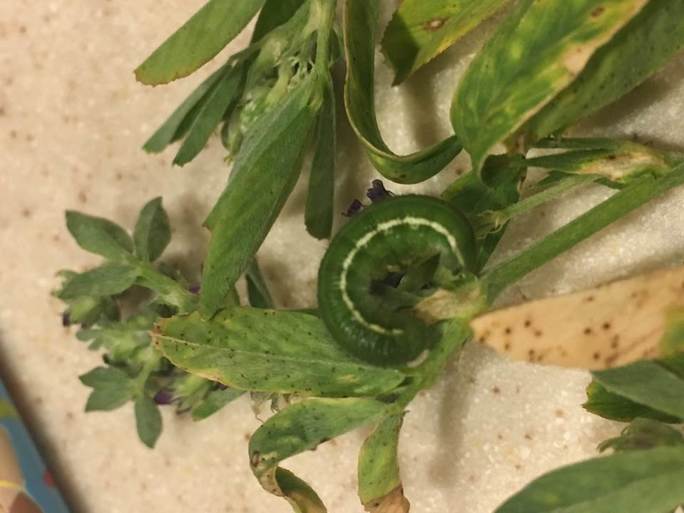
Alfalfa caterpillars are currently active throughout north central Kansas.  These caterpillars are feeding on foliage, and based upon the size of the larvae in fields, will soon be pupating.  In many fields, swathing is currently, or has just been done and this should help lessen alfalfa caterpillar populations.  However, if the timing is such that these larvae are pupating in the soil and thus swathing does not remove/destroy the pupae, the emerging butterflies may lay eggs on recently cut fields and the developing larvae may feed on regrowth.  This may retard regrowth for a couple of weeks until larvae pupate.

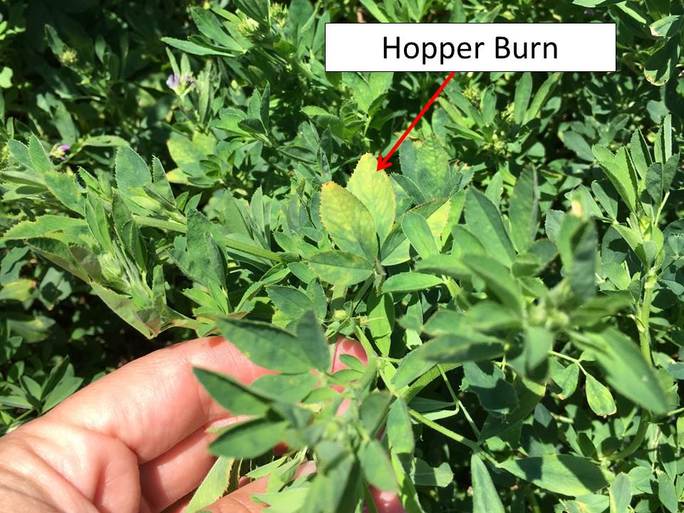
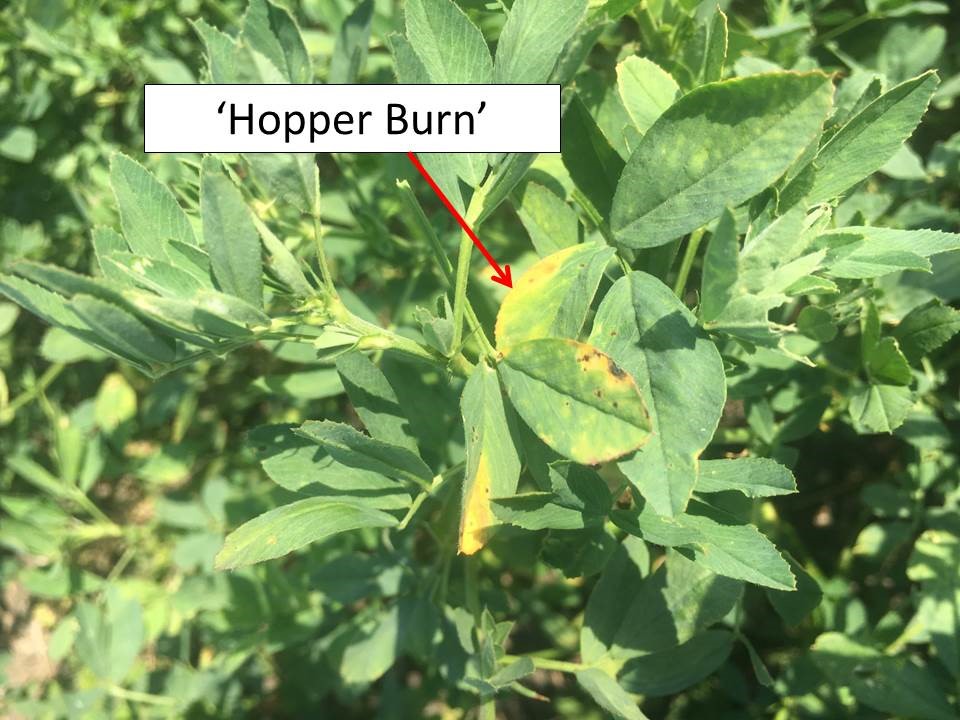
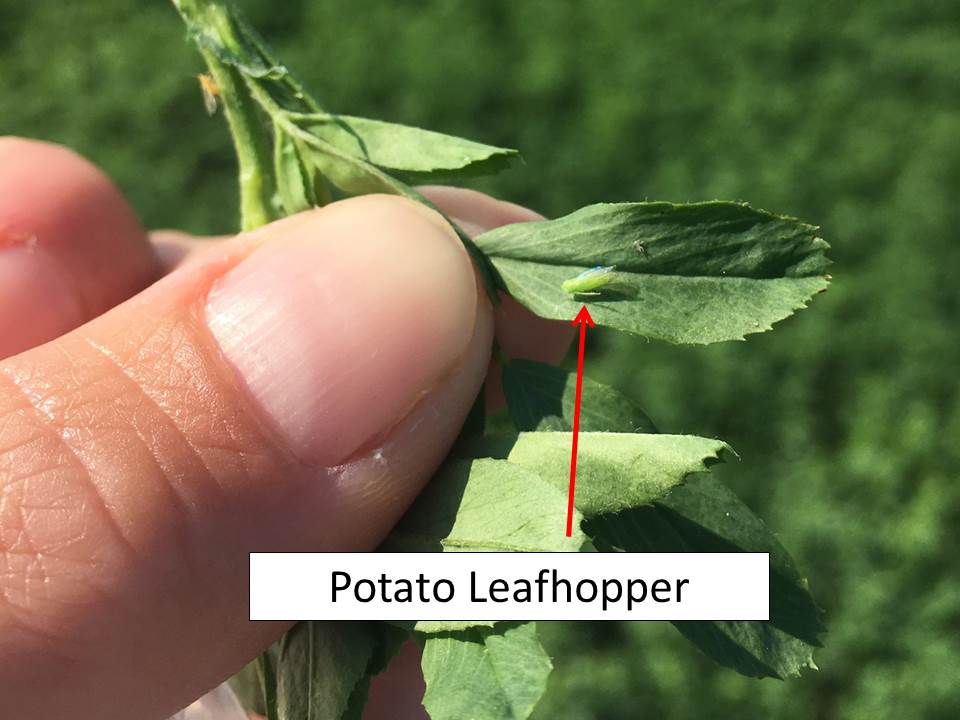
Potato leafhoppers are also very numerous throughout north central Kansas in uncut alfalfa fields.  Thus, their characteristic feeding damage, called ‘hopper burn’, is common.  Swathing should reduce potato leafhopper populations significantly and, hopefully, they will not rebound.  Continued monitoring is prudent as alfalfa caterpillar feeding and potato leafhopper damage may lessen the plant’s ability to store reserves in their roots for overwintering.

 

For management decisions for all alfalfa pests, please refer to the 2017 Alfalfa Insect Management Guide: https://www.bookstore.ksre.ksu.edu/pubs/MF809.pdf
 

Alfalfa Update

–by Dr. Jeff Whitworth and Dr. Holly Schwarting


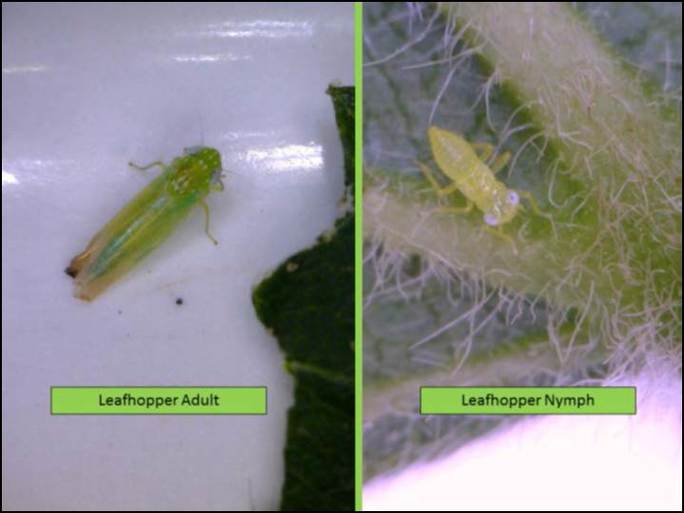
Potato leafhoppers are still common in all alfalfa fields sampled in the last 7-10 days, unless they have been swathed during that period of time.  Fields swathed within the last week did not have enough potato leafhoppers to reach a treatment threshold.  However, fields swathed just 10-14 days earlier are once again loaded with these little lime green, wedge-shaped leafhoppers.

There do seem to be good populations of green lacewings in uncut alfalfa fields.  However, they do not appear to be impacting the potato leafhopper populations.  We did pick up one alfalfa weevil larva and one adult in an uncut alfalfa field but the alfalfa weevils should not be of concern as major defoliators until next spring.


Alfalfa Update

–by Dr. Jeff Whitworth and Dr. Holly Schwarting

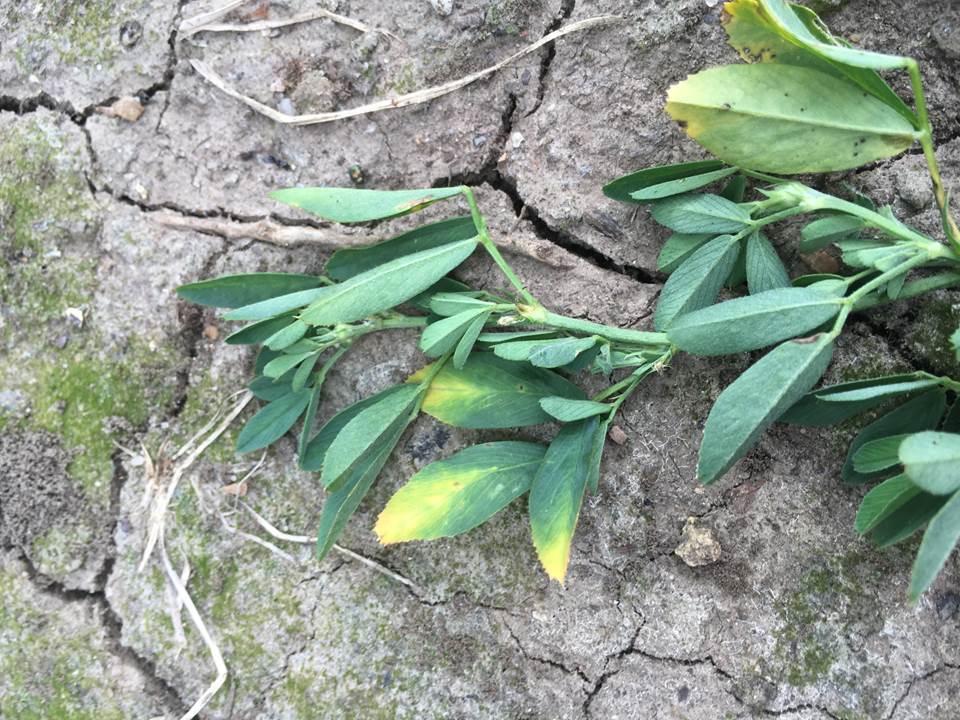
Potato leafhoppers have been infesting alfalfa fields throughout north central Kansas for at least the last month.  They continue to be very active, which is causing quite a bit of leaf yellowing, often called ‘hopper burn’, and even stem and whole-plant stress.  Typically, swathing is sufficient to manage leafhopper populations.  However, they have been actively reproducing and there are many nymphs, so it will be especially important to continue to scout these fields after swathing.  If a stubble spray is deemed necessary after swathing, one application is often highly effective and re-infestation is unusual.


Alfalfa caterpillars are also quite common in alfalfa fields, where they feed on foliage, although they rarely do enough damage to warrant an insecticide application.  They will eventually pupate and then turn into a yellow or white sulphur butterfly.

Alfalfa

–by Dr. Jeff Whitworth and Dr. Holly Schwarting

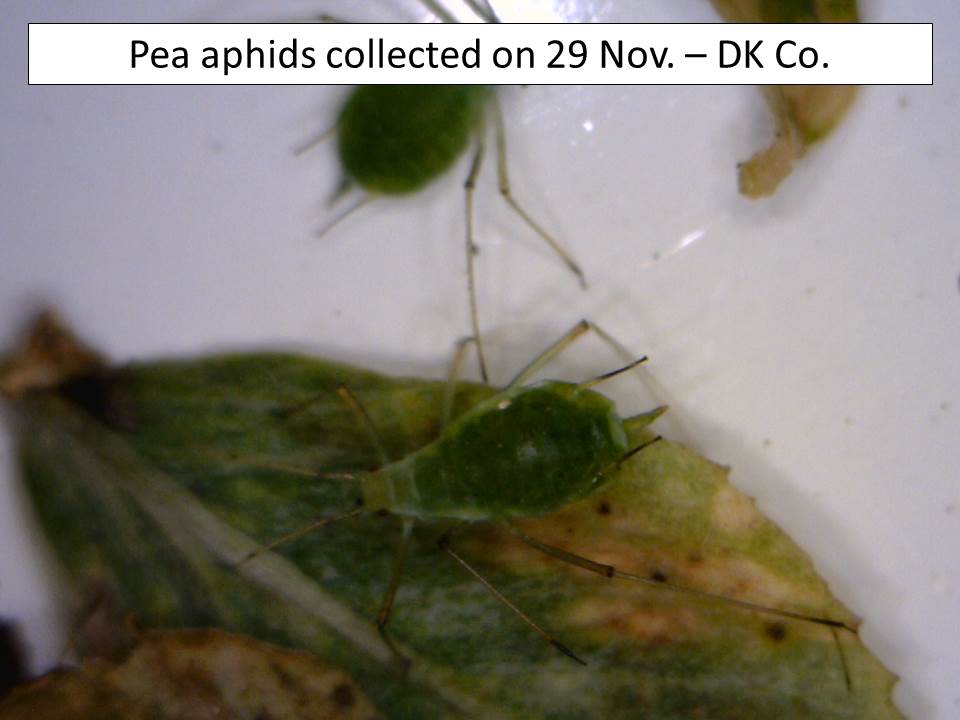
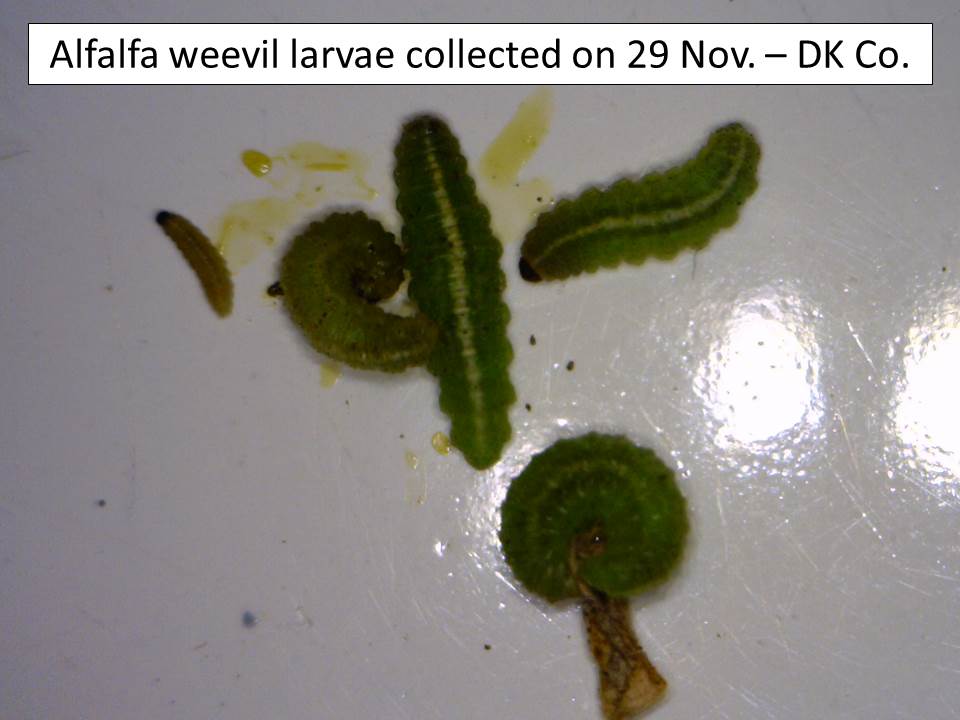
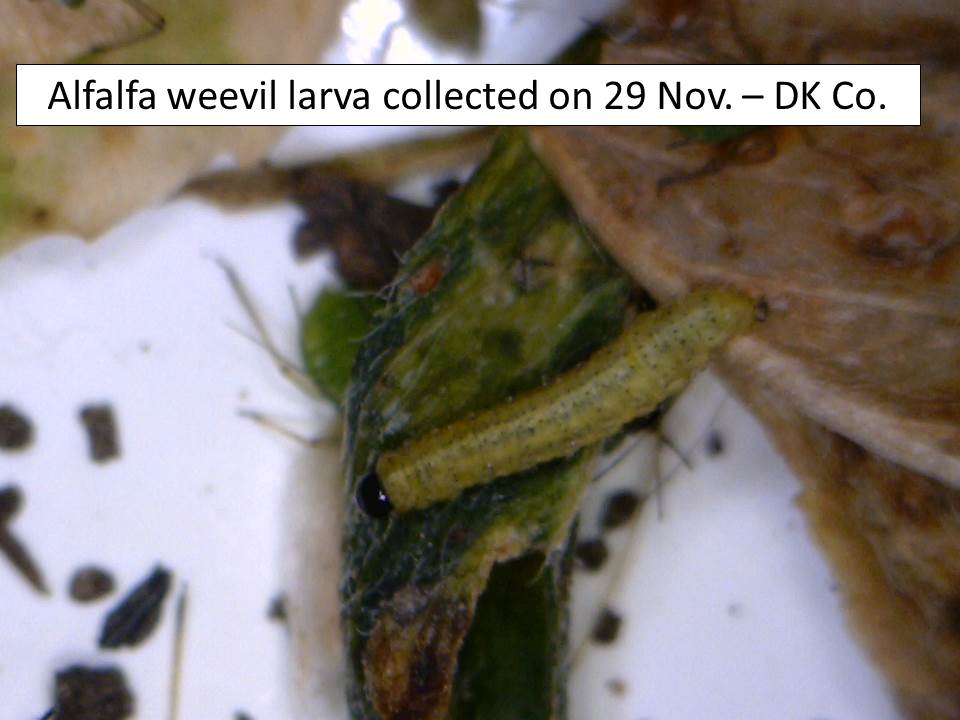
Alfalfa pests are still causing concern among alfalfa producers.  In north central Kansas the alfalfa has yet to become dormant, at least as of 29 Nov.  Also, in these slowly growing fields the pea aphids seem to be doing very well and no beneficials, which might help to control them, were detected.  Also, alfalfa weevil larvae are still actively feeding on leaf tissue.  One potato leafhopper was also picked up in sweep net samples.  Hopefully, the colder winter weather will eliminate the pea aphids and alfalfa weevil larvae!

pea-aphid-29-nov

aw-29-nov

aw-single-29-nov

Alfalfa Pest Update

–by Dr. Jeff Whitworth and Dr. Holly Schwarting


Potato leafhoppers are still numerous in most alfalfa fields around north central Kansas.  They are causing ‘hopper burn’ which can limit the plant’s ability to translocate nutrients to the roots prior to winter.

potato-leafhopper

hopper-burn

Swathing should help but if you have already cut your fields for the last time this year, monitoring should continue to ensure these little pests don’t cause too much plant stress, especially this time of year.  Hopefully, they will head south to overwinter soon!